This Day in Music
Michael Fitzgibbon
A little glam-rock, some flamboyant mainstream rock, industrial rock, roots-rock, and Elvis premiers a new movie, on this day in music.
Dynasty
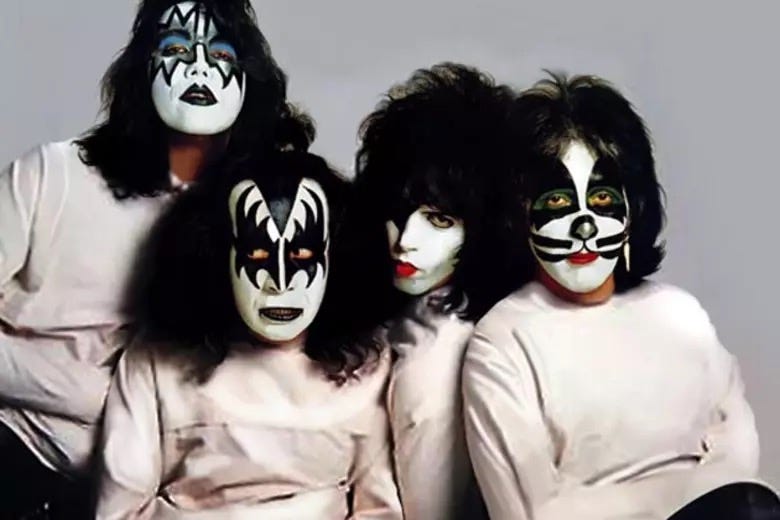
1979: Infamous American glam-rock band Kiss release their seventh studio album, “Dynasty.” In keeping with the times, the band added elements of disco to their sound, making this what some refer to as a hard-disco album.
It was the first Kiss album since 1977's “Love Gun,” though the band did release a lot of product in 1978, including their second contemporary live package, “Alive II,” and four eponymous solo albums featuring each member of the band. Drummer Peter Criss's solo effort was very much a disco record, and that germinated the idea of weaving disco influence into “Dynasty.”
Criss himself, however, does not perform on the record, with the exception of the song “Dirty Livin',” which he wrote. He was suffering from injuries related to a car accident, distracted too much by alcohol and drugs, and according to Gene Simmons, being a real jerk to everyone on the project, ultimately making his contributions sub-par. Session drummer Anton Fig, who would later go on to play for Paul Shaffer's David Letterman Show bands on NBC and CBS, was brought in to re-record all the drum parts.
The first single from the album, “I Was Made for Lovin' You,” the most disco-y track of them all, was a Top-10 single across North America, Europe, and Australia, going to No. 1 on both the singles and dance charts in Canada. The second single, “Sure Know Something,” was a Top-40 hit in most regions, going to the Top-10 in Australia and Netherlands.
The album itself was a commercial success, earning Platinum certification in the U.S., Canada, Netherlands, and Australia. The LP also includes a decent cover of The Rolling Stones’ “2,000 Man” from the 1967 album “Their Satanic Majesty's Request.” I'm not a big Kiss fan myself, but I like this record.
Captain Fantastic and the Brown Dirt Cowboy
1975: “Captain Fantastic and the Brown Dirt Cowboy,” the ninth studio album from legendary English singer-songwriter and piano player, Elton John, is released to the usual widespread critical acclaim and massive commercial success of 1970's EJ records.
It was the first album ever to reach No. 1 on the Billboard 200 in its first week of release, and became the fifth of six consecutive No. 1 albums for Elton. It sold a reported 1.4 million copies in that first week, on its way to selling over three million copies and multi-Platinum certification in the U.S., Australia, and Canada. Total sales to date are nearly six million.
Along with the title track, “Captain Fantastic and The Brown Dirt Cowboy,” the most popular songs from the LP are “Someone Saved My Life Tonight,” “We All Fall in Love Sometimes,” and “Bitter Fingers.” The song “Philadelphia Freedom,” released just a few months prior as a non-album single and No. 1 hit, was included on subsequent digital releases of the album.
The ConstruKction of Light
2000: Anglo-American prog-rock masters King Crimson release their twelfth studio album, “The ConstruKction of Light.” The first studio LP since “THRAK,” performed by the double-trio lineup of the band in 1995, the group is back to a quartet for this outing.
The lineup consists of Robert Fripp (g) of course, longtime member Adrien Belew (g) (and lyricist), Pat Mastelotto (d), whose only previous studio work with the band was “THRAK,” but has been a part of the group for over 30 years now, and Trey Gunn (bg and Warr guitar), who also appeared on “THRAK.”
Not to criticize Gunn and Pat, who are both supremely talented players, it was disappointing for most fans that Bill Bruford (d) and Tony Levin (bg) had left the band.
A heavier and harsher sound than previous KC releases, the record includes elements of prog-metal and industrial styles in the songs. It also features two instrumental sequels: “Larks’ Tongues in Aspic - Part IV,” which follows Parts I and II from the 1973 album “Larks’ Tongues in Aspic,” and Part III from 1984’s “Three of a Perfect Pair;” and “FraKctured,” a sequel to the song “Fracture” from the 1974 album, “Starless and Bible Black.”
Fripp was overall unhappy with the record, stating that none of the songs were played live and perfected before going into the studio, and he did not like that the drums were purely electronic. He also found he was focused more on his playing and writing than on production.
In 2019, it was discovered that part of the original master recordings were lost. Fripp used the opportunity to rework the LP, bringing Pat Mastelotto back in to re-record all of his drum parts on a predominantly acoustic drum rig, with electronics as enhancements. A newly-created album jacket was commissioned with new artwork, and the album was re-titled “The ReconstruKction of Light.” A remixed “FraKctured” was included as part of the KC50 series of archival recordings, also in 2019, celebrating 50 years of King Crimson.
The album split critics, evidenced by the AllMusic rating of only 2-Stars, and then the PopMatters rating of 8/10. It’s a good album, but probably one that appeals mostly to the band’s most ardent fans (such as me!). It’s the only KC album never to chart in the U.S.
Forever Blue
1995: American Rock and Roll musician Chris Isaak releases his fifth studio album, “Forever Blue.”
Three singles were spun out from the LP, including the Grammy-nominated “Somebody’s Crying,” “Baby Did a Bad Bad Thing,” which was featured in the Stanley Kubrick movie, Eyes Wide Shut, and “Graduation Day,” also featured in a movie, Ted Demme's Beautiful Girls.
Other popular cuts from the LP include the title track “Forever Blue” and “There She Goes.” At 13 songs totalling only 39 minutes in length, this is a pleasant collection of short roots Rock and Roll with a little rockabilly twang added in. It was certified Gold in Canada and Platinum in the U.S.
Music History
1999: A commemorative 19p stamp is issued by The Royal Mail honouring Queen frontman Freddie Mercury with an image based on his legendary performance with the band at Live Aid in 1985. Himself an avid philatelist, The Royal Mail purchased his stamp collection from his estate in 1993.
The Daily Elvis
1962: The ninth feature film to star Elvis Presley opens in theatres across the country. Titled Follow That Dream because producer Walter Mirisch liked the featured song of the same name, the movie follows a vagabond family traveling throughout Florida.
Blue Hawaii