This Day in Music
An historic recording, a legendary band releases a documentary soundtrack, and Elvis times ten, on this day in music.

Releases
“It’s like, how much more black can it be? And the answer is none. None more black.” ~Nigel Tufnel
1984: Legendary English pop-turned-psychedelic-turned-hard rock band, Spinal Tap, release the soundtrack album to their concert tour documentary film of the same name, “This is Spinal Tap.”
Originally named The Originals, then changing to The New Originals to distinguish themselves from a band in London’s west end with same name, then reverting back to The Originals after the other Originals broke-up, Spinal Tap was celebrating their 20th anniversary as recording artists, and the impending release of their new album, “Smell the Glove,” with a tour of the United States.
Choosing much-ballyhooed documentary filmmaker Martin “Marty” Di Bergi to capture the band on celluloid, warts and all, they set out on their American sojourn. Marty was convinced that he would experience the shallow egos of aging rock stars, but instead he got more. Much more.
The film captured the controversy surrounding the cover artwork for the forthcoming album “Smell the Glove.” Both Sears and K-Mart stores refused to stock the record if it was released with the intended bondage-themed image that demeaned women, a critical factor in label CEO Sir Dennis Eaton-Hogg pulling the release. Spinal Tap displayed their sheer genius, settling on a design of solid black, covering the entire album jacket.
The album itself revealed an evolution in songwriting, eschewing past juvenile themes for more introspective and sophisticated lyrical content, as demonstrated by songs like “Big Bottom,” “Hell Hole,” “Lick My Love Pump,” and of course, the poetic “Sex Farm.” The album also features a re-release of one of the group’s first hit songs, “Gimme Some Money,” from 1964.
Though the tour encountered its share of challenges, including a record store appearance attended by nobody, second billing to a puppet show, and the unfortunate error in proportional specifications that saw band members nearly trample a Stonehenge model on stage, it did see the debut of the band’s Mark II lineup, following the acrimonious departure of co-founder and lead guitarist Nigel Tufnel partway through the schedule. Showing typical Tap perseverance, the band, now a quartet, opted to play improvisational jazz-fusion.
It was a short lived change however, as “Sex Farm” became a hit in Japan, and Tufnel gloriously reunited with his long-time bandmates on the last date of the American tour before embarking for the far-East. That tour also saw the introduction of new drummer, Joe “Mama” Besser, when Mick Shrimpton spontaneously combusted on stage, after only recently joining the band.
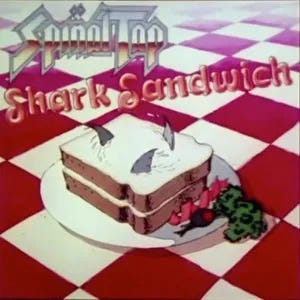
Critics heaped praise upon the LP, with AllMusic compiling 4.5-Stars, and the ever-demanding Robert Christgau of the Village Voice assigning it a grade of B+. The reviews came in sharp contrast to some of Tap’s prior releases that were panned by critics, including “Intravenus de Milo”, “The Gospel According to Spinal Tap”, to which one critic remarked, “What day did the Lord create Spinal Tap, and couldn’t he have rested on that day, too?,” and the infamous two-word review of “Shark Sandwich:” “Shit sandwich.” (That’s not real, is it? You can’t print that!)
“This Is Spinal Tap” never charted or reached a sales certification, but it is nonetheless one of the great works in the hard rock oeuvre, and is a release every record collector must own.
1973: San Jose rockers The Doobie Brothers release their third studio album, "The Captain and Me." With standout hits "Long Train Runnin'," "China Grove," and "South City Midnight Lady," the record was also a hit with both fans and critics. Rated 5-Stars by Record Collector magazine, it reached No. 7 on the Billboard 200 and is certified Double Platinum in the U.S.
Events
1975: Paul McCartney is pulled over by the LAPD while driving his Lincoln Continental in Los Angeles. Alleging that they detected the odour of marijuana, an anti-Fourth Amendment ploy now thankfully struck down by the courts, though police forces throughout America continue to erroneously violate the order, the cops searched the vehicle and discovered six ounces of weed in Linda McCartney’s purse. They charged Linda with possession, but she beat the rap.
The Monday Miles
1959: At Columbia 30th Street Studio in New York, five legendary jazz musicians join Miles Davis to begin recording what would be the modal jazz masterpiece, “Kind of Blue,” his 36th album.
Joining Miles in the studio were Cannonball Adderley (as), John Coltrane (ts), Bill Evans (p), Paul Chambers (b), and Jimmy Cobb (d). Wynton Kelly played piano on the tracks “Freddie Freeloader” and “So What” instead of Bill Evans.
The record would be release on August 17, 1959, and this blog will cover it in great detail on its anniversary.
The Daily Elvis
1956: Elvis sets a new Billboard Hot 100 record with ten songs appearing on the chart simultaneously. The songs were: “Love Me Tender”, “Love Me,” “Don’t Be Cruel,” “When My Blue Moon Turns to Gold Again,” “Old Shep,” “Hound Dog,” “Poor Boy,” “Anyway You Want Me (That’s How I will Be),” “Paralyzed,” and “Blue Moon.”
Pictured: "Shark Sandwich" album cover by Spinal Tap.