This Day in Music
It's the Ides of March, but before you jump in your "Vehicle," beware the words of the soothsayer in Shakespeare's historic play, lest you be assassinated! On this day in music.

Releases
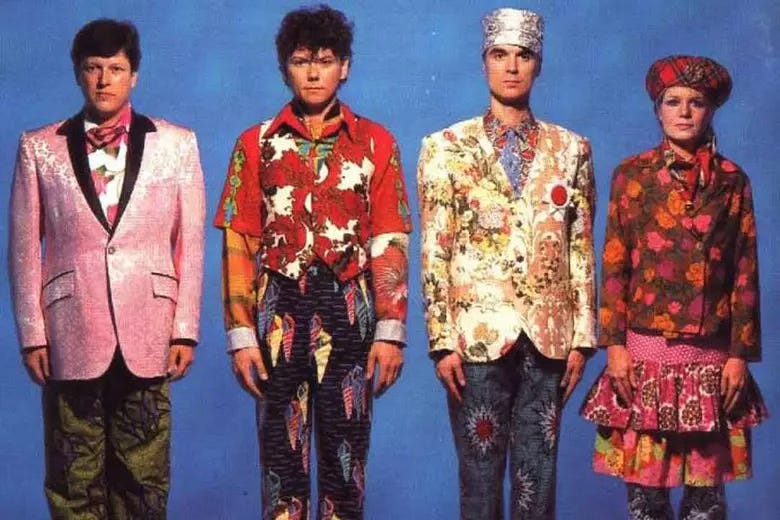
1988: American post-punk/new wave band Talking Heads release their eighth and final studio album, “Naked.” The album was a return to the world-beats sound that appeared on earlier albums like “Remain in Light” and “Speaking in Tongues,” following two modern rock works, “Little Creatures” and “True Stories.”
Blending elements of afrobeats and latin funk, the basic tracks were recorded in Paris from jam sessions that featured many invited musical guests, including The Smiths guitarist Johnny Marr, popular English folk singer Kirsty MacColl (the female voice on The Pogues’ “Fairytale of New York”), Guinean vocalist More Kanté, and American multi-instrumentalist Eric Weissberg, famous for playing banjo on the song “Dueling Banjos” from the movie Deliverance, among many others. (he’s not the now-grown up kid in the movie, he just played the banjo that is overdubbed into the scene)
Critics mostly welcomed the album, praising its return to earlier Talking Heads sounds, with Robert Christgau grading it a B+ and Spin ranking it 8/10. Not all reviewers were happy, however, noted by The Rolling Stone Record Guide rating it only 2-Stars, and AllMusic compiling a rating of 3-Stars.
The LP was nonetheless a commercial success, reaching No. 3 on the U.K. Albums Chart, and No. 19 on the Billboard 200 in the U.S., where it was certified Gold. David Byrne focused entirely on his solo career following “Naked,” never officially leaving or disbanding the group, but never again playing with or under the name Talking Heads, except for their performance in 2022 at The Rock and Roll Hall of Fame induction ceremony.
1976: Kiss releases their fourth studio LP, “Destroyer.” Bringing on Toronto-based producer Bob Ezrin, the album reflected a departure from the raw sound of their first three records.
With the hits “Detroit Rock City,” “Shout it Out Loud,” and “Beth,” it was Kiss's biggest release of the time, peaking at No. 11 on the Billboard 200 and certified double-Platinum in the U.S. It was also a big international hit, going to No. 6 in Canada, No. 4 in Sweden, and No. 6 in Australia.
1970: The funky tune “Vehicle” is released by those jazzy rockers from Berwyn, IL, The Ides of March, to great commercial success. It reached No. 2 on the Billboard Hot 100 and No. 3 on the Canada RPM singles chart. Written by lead singer Jim Peterik, it was a complaint of sorts about his girlfriend only dating him because he was effectively her vehicle, driving her wherever she wanted to go.
Though the specific date is unconfirmed, it was released in March. Today seems like the best day to remember it.
Events
1972: Bob Morgan of 93 KHJ in Los Angeles played the Donny Osmond version of Paul Anka's song, “Puppy Love,” repeatedly for 90 minutes straight. Believing the station had been taken over by ne'er-do-wells, listeners called police, who raided the broadcaster. No arrests were made over the misunderstanding.
The ridiculous practice of playing a song considered to be silly or otherwise of poor quality over and over again became a popular antic amongst DJ's in the 1970’s, annoying listeners all across the continent.
44 B.C.: Legendary Roman general, statesman, and dictator perpetuo, Gaius Julius Caesar, is set upon by a group of 60 senators in the Curia Julia, heartbreakingly including his friend Marcus Junius Brutus (et tu, Brutè), who assassinate him in a bid to prevent the Republic from becoming a monarchy.
Though he never charted a Top-10 single, Caesar’s conquests reached No.1 in the regions of England, Belgium, Switzerland, France, Spain, Italy, Greece, and Egypt.
The Daily Elvis
1958: Elvis performs at Russwood Park in Memphis, TN. It would be his last concert before joining the U.S. Army. On drums that night, as usual for that era, was D.J. Fontana, performing on his 27th birthday.
Pictured: Talking Heads, Little Creatures era, from L to R: Chris Frantz (d), Jerry Harrison (key; g; vox), David Byrne (g; vox), and Tina Weymouth (b; vox).