This Day in Music
A quiet moment, a raucous moment, a beautiful moment, and Elvis II: The Returninging, all on this day in music.

Even in the Quietest Moments…
1977: Legendary semi-prog, semi-rock, all awesome British band Supertramp release one of the great works of the Rock and Roll oeuvre, their fifth studio album, “Even in the Quietest Moments…”
Every last note on this LP, from the opening track, “Give a Little Bit,” to the closing ten-minute epic, “Fool's Overture,” and two of the band’s absolute bests in between, “From Now On” and “Even in the Quietest Moments,” lands with perfection upon the listener's ears.
It peaked at No. 16 on the Billboard 200 and No. 12 on the U.K. Albums Chart, but in Supertramp-crazy Canada, where fans with obviously the best taste in music reside, it went all the way to No. 1 on the RPM Top Albums Chart.
In addition to the songs noted above, the LP also includes the beautiful piano and vocal love song by Rick Davies, “Downstream,” and the great pop-prog songs “Loverboy” and “Babaji.”
A popular investigative news-magazine TV show in Canada, titled W5, used the melody from “Fool's Overture” as the program's theme music for over 15 years.
“Even in the Quietest Moments…” was certified Platinum in Canada, France, and Switzerland, and Gold in the U.S. It has sold only 1.5 million copies worldwide, which is criminally low for such a fabulous record, therefore all readers are encouraged to go out and buy it today. It was re-released by Universal Music on 180g vinyl just last month.
The Clash
1977: A very different style of music was introduced on the same day as that Supertramp classic, the debut studio album by British punk band The Clash, simply titled “The Clash,” in the U.K. The U.S. version, with a slightly altered track listing, would not be released until 1979 following the band's second studio LP, “Give 'Em Enough Rope,” in 1978.
A collection of short, energetic, and powerful punk songs, “The Clash” took the world by storm, earning universal acclaim from critics. All major music magazines rated it full marks, including AllMusic, New Musical Express, Rolling Stone, Q, and Village Voice, with Robert Christgau writing about the U.S. release, “Cut for cut, this may be the greatest rock and roll album (plus limited-edition bonus single) ever manufactured in the U.S.” That’s high praise from an otherwise ornery reviewer.
The album peaked at No. 12 on the U.K. Albums Chart, was certified Gold, and earned the band a huge following of fans. Its U.S. release in 1979 also earned Gold certification. They would only get bigger with each successive album.
So Beautiful or So What
2011: Legendary American singer-songwriter Paul Simon releases his 12th studio album “So Beautiful or So What.” Recorded at Simon’s own cottage in New Canaan, CT, and his summer house in Montauk in East Hampton, NY, the LP did not garner a lot of attention, but is a fabulous record that earned widespread critical praise, with its MetaCritic score coming in at 85/100.
Musically, the album features guitar stylings in a West African blues tradition, Indian-style percussion, and the use of sampling, ranging from an excerpt of a 1941 Christian sermon, to ambient sounds of nighttime in Kenya. Lyrically, “So Beautiful or So What” sings of spirituality and mortality, unintentional themes arising organically from his songwriting at that point in his life, according to Simon himself.
Though it reached no sales certifications other than Silver in the U.K., it peaked at No. 7 on Billboard Canada Chart, No. 6 on the U.K. Albums chart, and No. 4 on the U.S. Billboard 200.
Have I Offended Someone?
1997: The sixth posthumous LP from Frank Zappa, and official album No. 67, “Have I Offended Someone?,” is released.
As the title suggests, it's a compilation of songs that were particularly offensive to various people for various reasons, including “Bobby Brown Goes Down,” “Goblin Girl,” “In France,” “Titties ‘n Beer,” and “Catholic Girls,” to name a few.
Though the lyrics offended many, the music was generally fantastic, exemplified by the middle instrumental section of “Catholic Girls.”
The songs unfortunately put Zappa in a poor light when grouped out of the context of their original albums. However, Zappa left instructions to his family before he died that they should “sell-out” his work for maximum dollar because he wanted to provide for his survivors. They were to squeeze every last dime out of his works.
This record is indeed a “sell-out.” I still bought it, though.
Flashpoint
1991: Speaking of selling-out, “Flashpoint,” the fifth contemporary live album from The Rolling Stones is released, a compilation of recordings made during their Steel Wheels Urban Jungle tour between 1989 and 1990.
In addition to live versions of several of their most popular hits, it features two previously-unreleased studio tracks, which is the Stones' excessively-annoying business model to get fans to buy the same 15 songs they already own several times over.
The Daily Elvis
1960: Legendary American crooner, idol, and The King of Rock and Roll, Elvis Presley, releases his fourth studio album, and the first since his honourable discharge from the U.S. Army, “Elvis is Back!”
Though he spent two years in the army, Elvis had recorded a fair amount of work before enlisting, which RCA Victor then released periodically throughout his military tenure. It was a genius marketing move by Col. Tom Parker to keep Elvis famous while he was out of the entertainment business. In those days news was not as omnipresent as it is today, and because of this gradual release strategy, many fans never even realized Elvis was gone.
Nonetheless, it was past time for a new album!
Recorded at RCA Studio B in Nashville, and including some of his coolest hits like “Fever,” “Such a Night,” “The Girl of My Best Friend” and “It Feels So Right,” it was a huge hit with critics. Holding just under a 5-Star rating at AllMusic and The Rolling Stone Record Guide, Billboard wrote of the album, “Elvis is back and singing better than ever in the rock and roll style he made famous.” Actually, the sound of the album was a little more pop-oriented than Rock and Roll, a transition he would make in the sixties.
Fans of course were ecstatic about the LP. It reached No. 1 on the U.K Albums List and No. 2 on the Billboard Top Selling LP’s Chart (now the Billboard 200), and was certified Gold in the U.S.
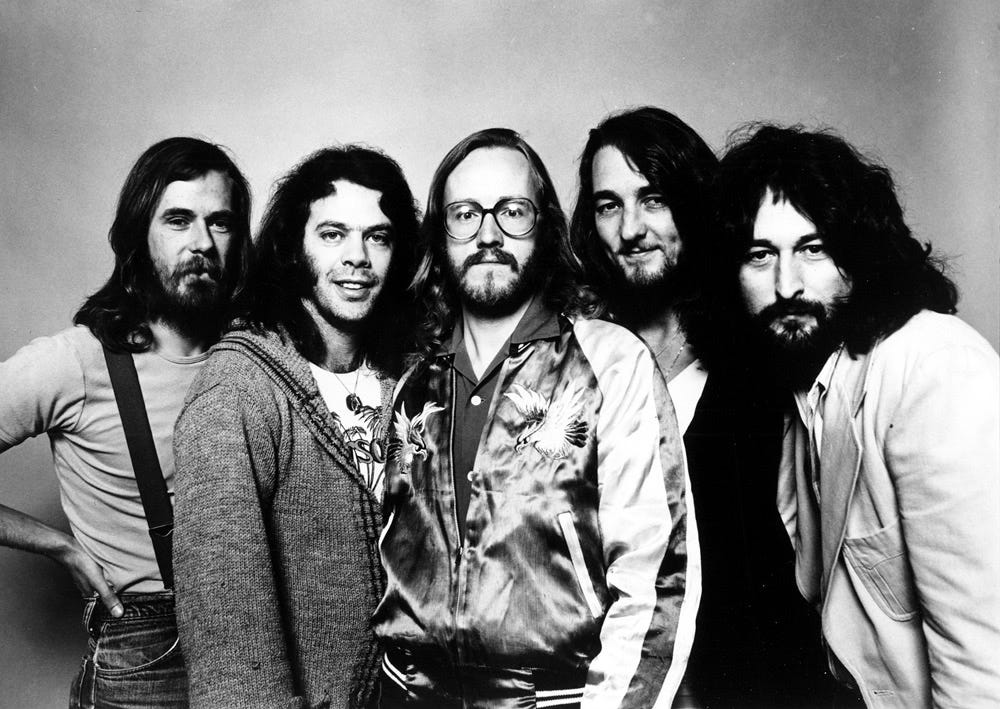
Pictured: Supertramp in 1977, from L to R: Dougie Thompson (bg), Bob Siebenberg (d; perc), John Helliwell (wind; v), Roger Hodgson (v; g; p; synth; or), and Rick Davies (v; p; elp; synth).