This Day in Music
Michael Fitzgibbon
Feeling low, a con royale, a birthday for Bonzo, and Elvis takes the mop tops bowling, on this day in music.
The Royal Scam
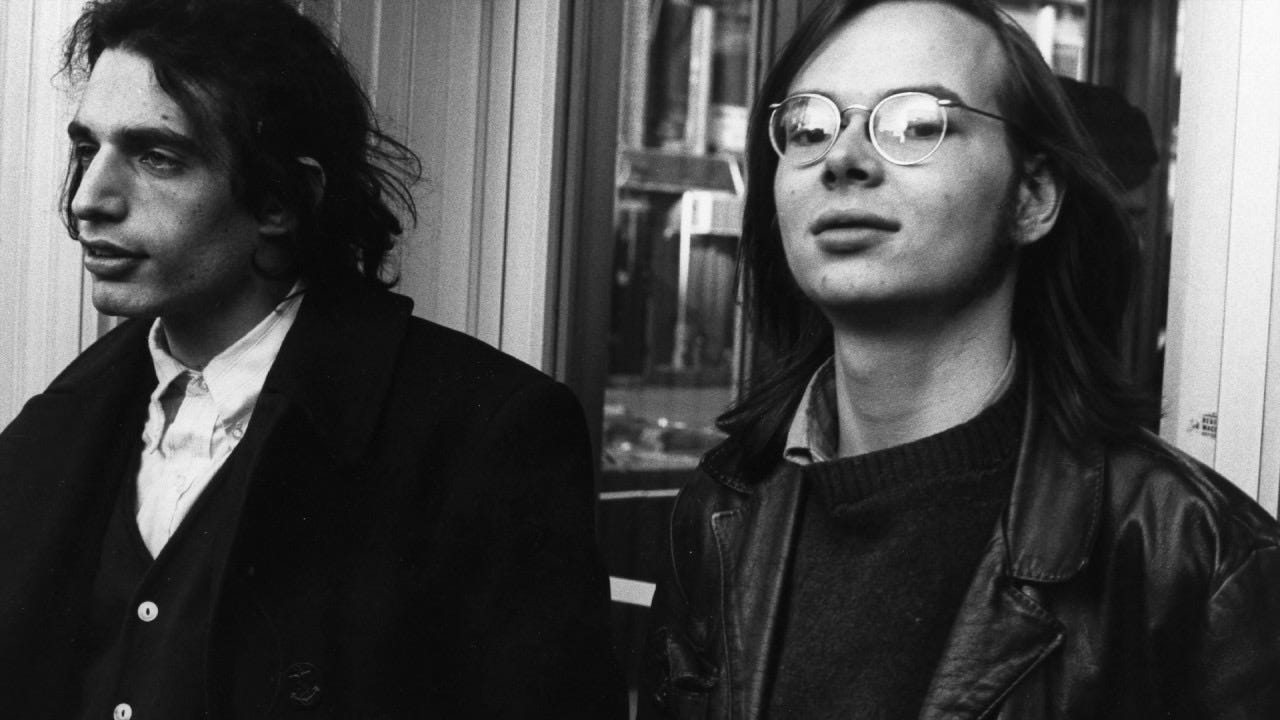
1976: Legendary American songwriting duo Steely Dan release their fifth studio album, “The Royal Scam.” Though Steely Dan began as a group, it quickly became a writing partnership between Donald Fagen and Walter Becker, with Gary Katz producing most albums.
The team would hire studio musicians to perform the parts that Donald and Walter couldn’t, or for instruments they didn’t play, and they sought absolute perfection. For this LP, no less than 22 musicians were hired, including famous players Rick Marotta and Bernard Purdie on drums, Michael McDonald and Timothy B. Schmidt on backing vocals, and Larry Carlton as one of five guitarists.
Was it necessary to hire this many musicians in order to make a good record? No, it was excessive. I’m a big fan of the Dan, and I enjoy this album, but I understand the criticism of the music as being too slick.
The album was a hit with audiences, who sent it to Platinum certification in the U.S., Gold in Canada, and Silver in the U.K. “The Royal Scam” also did well in the charts, peaking at No. 15 on the Billboard 200 and No. 11 in the U.K. It’s highest chart success was in New Zealand where it hit No. 3. It has certified sales of nearly 1.5 million copies worldwide.
Critically, the album received varying degrees of praise. Its highest rating of 5-Stars was awarded by Rolling Stone, while its lowest rating was 3-Stars, interestingly by The Rolling Stone Album Guide. Other reviews typically fell in the 3-Star or 6/10 range. The key knock against the record was that it did not show any musical progress from its predecessor, “Katy Lied.”
Famous tracks from the LP include “Kid Charlemagne,” “The Fez,” “The Royal Scam,” and “Don’t Take Me Alive,” which might not be recognizable by title but by its lyrics, “I’m a bookkeepers’ son; I don’t want to shoot no one; Well I crossed my old man back Oregon; Don’t take me alive.”
Too Low for Zero
1983: “Too Low for Zero,” the 17th studio album by legendary English singer-songwriter Elton John is released to a tepid reception from critics, though it carries a rating of 4.5-Stars at AllMusic.
It was a comeback LP for John as his prior four albums all did poor commercial business and were criticized for their lack of hits. Though “Too Low for Zero” is not a spectacular album, it did spin-off the No. 1 hits “I’m Still Standing” and “I Guess That’s Why They Call It the Blues,” both songs reaching that peak in Canada and making the Top-10 in many other markets.
More importantly to Geffen, the record label, the LP was a strong commercial success, reaching Platinum certification in the U.S., U.K., Canada, Australia (5x), and New Zealand (2x), while going Gold in France, Germany, Italy, and Switzerland. Total estimated sales for the album stand at 3.5 million units.
Birthday
1948: In Redditch (Worcestershire), England, John Henry Bonham, known simply as John Bonham, is born. Though he recorded with other acts, he is of course most famous as the legendary percussionist for Led Zeppelin.
A supremely-talented drummer, Bonham rounded out the Zeppelin sound and made it so unique that after his untimely death at only 32 years old in September of 1980, the group disbanded, stating that it’s just not Led Zeppelin without John Bonham.
Bonzo would play the heaviest, half-time grooves, exemplified by songs like “When the Levee Breaks” and “Fool in the Rain,” wherein he lays down the grooviest rolling-triplet shuffle in Rock and Roll.
He had a powerful but also dynamic touch, such as on “Dazed and Confused,” “Ten Years Gone,” and “The Rain Song,” playing light as air where the music required, and bringing down The Hammer of the Gods when the song got heavy.
John Bonham also perfected Joe Morello’s drumset triplet trick, wherein a triplet is played left hand-right hand-bass drum, or the reverse, and moved around the toms, snare, and floor toms of the drumset. He could play it feather-soft and as slow as dirge, all the way up to hypersonic fast and sledgehammer hard, or in reverse combinations. For a little extra flair, he would cross his arms over while doing to trick while still going at blistering speed.
He would use the trick as the finale of his solo in “Moby Dick,” or even as fills within songs, such as on the penultimate section of “Dazed and Confused.” Scroll to 13:55 in the video below for a sample of this trick and watch in awe. Then watch the whole video because his solo is fabulous all the way through, beginning with his quote of “The Drum Also Waltzes” by Max Roach.
Today is a good day to listen to the performances of John Bonham. My favourites of his tracks, most of which have already been mentioned and are also my favourites of Led Zeppelin in general, are “When the Levee Breaks,” “Fool in the Rain,” “Kashmir,” “Dazed and Confused,” “Moby Dick,” “Ten Years Gone,” “Good Times, Bad Times,” “The Crunge,” “Rock and Roll,” “The Ocean,” “Four Sticks,” “Black Dog,” and just too many others to mention!
Happy Heavenly Birthday, Bonzo!
The Daily Elvis
1967: Elvis and Priscilla host an all-night bowling party for his closest friends and family at the Whitehaven Plaza in Memphis. The party started just before midnight and lasted until 4:00pm the next day. Sixteen hours of fun and craziness!
My wife & I just finished a two day road trip to Taos, NM. We listened to Cirizen Steely Dan. It's our favorite driving music. 🤘😎🤘
Genius!
When you stop listening to Steely Dan, you’ve lost the ability to smile!