This Day in Music
December 16th

Disco soars to feverish new heights, while a jazz legend heads to the basement, jazz-rock is jolted by a sensational new act, and Elvis makes history. All on this day in music.
Releases
1977: The movie Saturday Night Fever is released in the US, drawing renewed attention to its soundtrack, led by The Bee Gees, which was released as a double-album one month earlier. “Saturday Night Fever” would spin out eight singles, four of which went to No. 1 on the Billboard Hot 100, and six that reached the Top 10. The Bee Gees wrote all four of the No. 1 singles: “How Deep is Your Love,” “Stayin’ Alive,” “Night Fever,” and “If I Can’t Have You,” performing the first three themselves, with Yvonne Elliman performing the last.
On the release day of the movie, The Bee Gees were awarded a Gold record for the single, “How Deep is Your Love.”
The album was a worldwide smash success, reaching No. 1 everywhere, including on the Billboard 200, where it remained for 24 weeks. It was certified 16x Platinum in the US, and for a while it was the highest-selling album of all time at an estimated 40 million units shipped, until it was overtaken by albums with more longevity, including the current No. 1, Michael Jackson’s “Thriller.” It now sits at No. 10 all time. It is the second-highest selling soundtrack album after the “The Bodyguard,” which features Whitney Houston, who also starred in the movie, on just over half of the songs.
1963: American jazz legend Miles Davis releases his 45th album, “Quiet Nights.” Featuring “third stream” music, a fusion of jazz and orchestra music, the style is mainly bossa nova. It was the fourth and last collaboration with legendary Canadian pianist and composer, Gil Evans, who arranged and conducted all the tracks.
An average album by Miles’s standards, it received tepid responses from critics, but it is nonetheless a beautiful work of music. Saturday Review magazine described Davis’s playing as a “…wonderfully songful trumpet in a Latin-American vein…set against piercingly lustrous curtains of tone and discreet Caribbean rhythms.”
1968: “The Soft Machine,” the psychedelic debut album from Kent, England jazz-rockers Soft Machine is released. Recorded in the spring of 1968 while on tour in the US, it was produced by Chas Chandler of Animals fame, and by legendary Columbia and Verve producer, Tom Wilson.
The LP was initially released only in the United States, Canada, and France, which restricted its potential for sales. Despite receiving little broad-based attention, it reached No. 160 on the Billboard 200 and No. 49 on Canada’s RPM 100.
A musician’s record, “The Soft Machine” was influential for many of the progressive rock and jazz-rock acts that would follow. The band itself was a driving force of the “Canterbury Scene” in late-1960’s Kent, a collective of like-minded musicians committed to improvisation, flexible song structures, and blending jazz and rock, often with psychedelic elements.
The band was a trio featuring drummer/vocalist Robert Wyatt, organist Mike Ratledge, and bassist and vocalist, Kevin Ayers. The foundation for two of the tracks, “Save Yourself” and “So Boot If At All” grew from 1967 sessions that included founding member Dævid Allen on guitar. Allen left before the LP was recorded to form the band Gong, and future Police guitarist Andy Summers joined the band, but lasted only two months. Hugh Hopper performed on “fuzz” bass for the final song, “Box 25/4 Lit,” eventually joining the group when Kevin Ayers departed. Also appearing on the album on background vocals for the penultimate track, “Why Are We Sleeping,” was the American girl group, The Cake.
1966: The early-60’s dark song by Billy Roberts, “Hey Joe,” is released by Jimi Hendrix as the first single with The Jimi Hendrix Experience. With a slowed tempo and the inimitable playing by Jimi on guitar and Mitch Mitchell on drums, the track reached No. 6 on the UK Singles Chart. It would also appear on the North American version of their first album, “Are You Experienced,” after failing to chart in the US as a single. The record was listed at No. 201 on Rolling Stone’s 2010 list of the 500 Greatest Songs of All Time.
Events
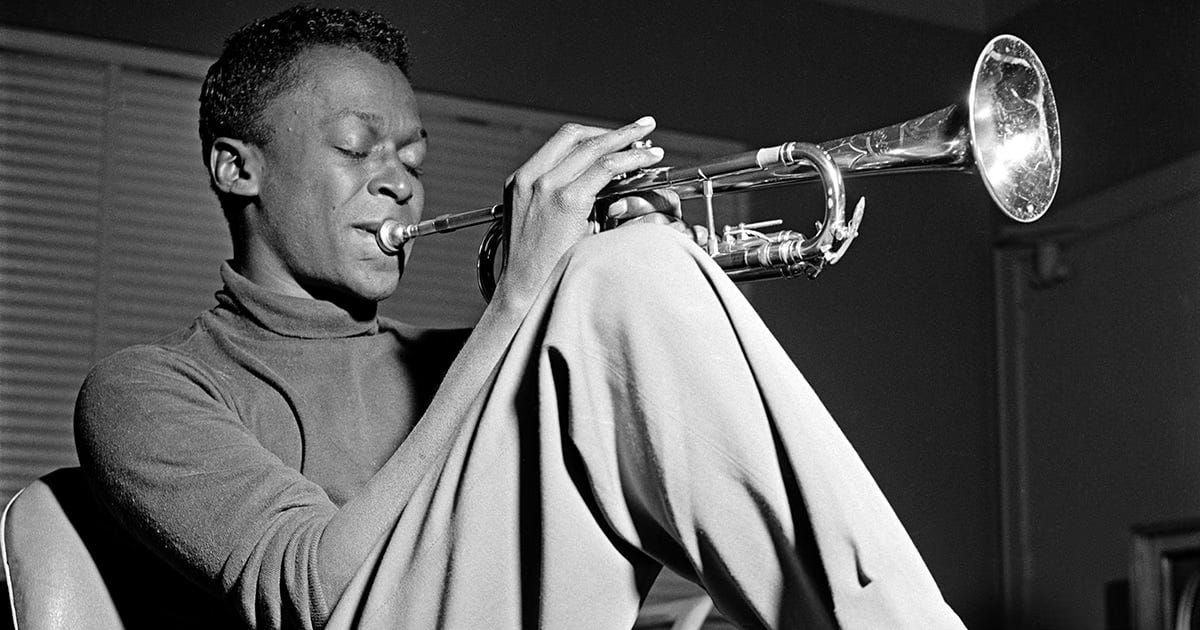
1970: Miles Davis and his sextet roll into The Cellar Door, the legendary 163-seat music club at 34th and M Streets in Georgetown, D.C., to perform ten sets of jazz-funk over four nights. The sessions were all recorded under the supervision of long-time Columbia Records producer Teo Macero, who frequently worked on Miles’s recordings.
Tapes of the sessions formed the basis of the live parts of Miles’s November 17, 1971 legendary release, “Live-Evil.” The rest of the recordings were put into the vault until December 27, 2005 when released as the five-hour plus package, “The Cellar Door Sessions,” covering six of the ten sets.
Forming the sextet during this run of performances were Miles Davis on “electric trumpet with wah-wah pedal,” Gary Bartz (ss; as; fl), Keith Jarrett (elp; or), Michael Henderson (eb), Jack DeJohnette (d), and Airto Moreira (perc). John McLaughlin also performed as guest musician on electric guitar in the latter part of the run.
P.s.: For a full list of the parenthesized, abbreviated instrument notations, see Noal Cohen’s jazz history website.
The Daily Elvis
1957: Becoming the best-selling Christmas album in history, “Elvis’ Christmas Album” by Elvis Presley reaches No. 1 in the US, despite the grammatical error in the title. (It should be “Elvis’s.”)
Pictured: Miles Davis, as cool as a cucumber, in December, 1970.