This Day in Music
Legends abound, Frank's in London, and Elvis bombs, on this day in music.

Releases
1974: Smooth-rocking New York band Steely Dan releases their third studio album, "Pretzel Logic." The album was a transition for the band as it evolved from a five-piece group to a writing and producing duopoly of only Donald Fagen and Walter Becker.
Choosing to record in Los Angeles, in addition to the regular touring group, several LA-area session musicians were enlisted for the album, reducing original drummer Jim Hodder to backing vocals only, with both Jim Gordon and Jeff Porcaro playing the drum parts. Jeff “Skunk” Baxter, in his final studio performance with Steely Dan, played guitar on most tracks, along with tour regular Denny Dias, but supplemented by local studio players. Timothy B. Schmidt of Eagles sings backing vocals on a few tracks, and would do so on future albums.
The experience prompted Fagen and Becker to make albums exclusively through the hiring of session musicians, and by the time they did “Aja” in 1977 and “Goucho” in 1980, practically each track features a different roster of players.
"Pretzel Logic" received widespread critical acclaim, graded A+ from Robert Christgau and 5-Stars from The Rolling Stone Album Guide, among many others. Commercially, it was also successful with the lead single, "Rikki Don't Lose That Number," hitting No. 4 on the Billboard Hot 100 and No. 3 on the Canada RPM Top Singles chart, and the album itself peaking at No. 8 on the Billboard 200. The LP was certified Gold in 1974 and Platinum in 1993.
The record features other famous Steely Dan tracks, such as "Any Major Dude Will Tell You," "East St. Louis Toodle-Oo," which is a rock cover of the Duke Ellington classic, and the title track, "Pretzel Logic."
Oh, and if you call this music “yacht rock,” Donald Fagen will justifiably hunt you down and berate you.
1958: A young man named Charles Hardin Holley, otherwise known as Buddy Holly, explodes onto the scene with his eponymously-titled debut studio album. Though credited only to Holly, it features The Crickets on every track, supplemented by additional vocalists and piano players.
The LP includes the earlier Holly hit single, "Peggy Sue," along with future classics "I'm Gonna Love You Too," "Words of Love," and "Rave On."
The critics raved-on and audiences went wild, signalling that Rock and Roll was truly here to stay.
2001: Legendary Canadian singer-songwriter Leonard Cohen releases his first non-contemporary live album, "Field Commander Cohen: Tour of 1979." As the title suggests, it consists of performances on his 1979 tour, with recordings taking place at London's Hammersmith Odeon and Brighton's Dome Theatre, in early December, 1979.
Backing Cohen was the band Passenger, a jazz outfit from Austin, Texas, along with singers Laura Branigan and Jennifer Warnes, and singer-songwriter and long-time Cohen collaborator, Sharon Robinson.
The record's tracks feature a mixture of songs from Cohen's 1979 release, "Recent Songs," along with several of his classics from his 13-year career in music at that point. The song “Memories” from the album “Death of a Ladies’ Man” was also included, notable because Cohen was loathe to play songs from that album. It was co-written and produced with Phil Spector, who was so brutal and domineering to work with that Cohen did not want to perform those songs in order to deny ASCAP fees to Spector, and because he didn’t feel the album was purely his own. He eventually ceased to perform songs from “Death of a Ladies’ Man” altogether.
Though commercial sales were modest, critics praised the album, with James Hunter of Rolling Stone referring to it as “...elaborately, and yet simply, awesome.” A good description of every Leonard Cohen album!
1979: "George Harrison," the eighth studio album from ex-Beatle George Harrison is released to critical acclaim. Written mostly throughout 1978, it was a good time in Harrison's life, as he had recently married Olivia Arias, had become a father for the first time, to son Dhani Harrison, and had taken 1977 away from music to follow the Formula-1 World Tour with Olivia.
Co-produced with Russ Titleman and featuring long-time friends and musicians Neil Larsen, Willie Weeks, Andy Newmark, Gary Wright, and Eric Clapton, the album's songs reflect the period of contentment Harrison was experiencing, with "Love Comes to Everyone" inspired by Arias, and "Faster" dedicated to F1 driver and future TV commentator for the F1 circuit, Jackie Stewart.
Additional inspiration for "Faster" came from Nikki Lauda, the legendary driver who returned from a near-fatal crash. The song also helped raise money for cancer research for a fund created by driver Gunnar Nilsson, and for Ronnie Petersen, who died in a crash at the 1978 Italian Grand Prix.
Appearing on the album is a new version of "Not Guilty," a song originally recorded but not released by The Beatles during the “white album” sessions. The LP's lead single, "Blow Away," reached No. 2 on the Billboard Adult Contemporary Top 50 and No. 7 on the Canada RPM 100 chart.
Critics heaped praise upon the album, with Bob Spitz of the Washington Post remarking that the release re-established Harrison as a “first-rate composer.” The New Musical Express commented that the album “succeeded admirably,” and AllMusic lauds Harrison's acoustic and electric guitar playing.
It would go on to reach Gold certification in the US for 500,000 units sold.
The Friday Frank
1977: As part of his European Tour, Frank Zappa performs in London at Hammersmith Odeon.
Included in the set of 17 songs were the FZ classics “Muffin Man,” “Camarillo Brillo,” and “Peaches en Regalia,” along with new songs that would appear on the 1979 album, “Sheik Yerbouti,” including “City of Tiny Lights.” Zappa also performed the Mothers of Invention classics “A Pound for a Brown on the Bus,” “My Guitar Wants to Kill Your Mama,” and “Big Leg Emma.”
The tour featured a small but highly-talented band including Terry Bozzio (d), Ray White (v; g), Eddie Jobson (key; vn), and Patrick O’Hearn (bg).
The Daily Elvis
1972: Elvis releases his 16th studio album, "Elvis Now." With songs recorded as far back as 1968, the “now” in the title is somewhat of a misdirection. Featuring covers of The Beatles' "Hey Jude" and Gordon Lightfoot's "Early Mornin' Rain," the album was poorly-rated, with AllMusic compiling a ranking of just 2.5-Stars. Though it bombed critically, it is an Elvis record, so it did good business, ultimately being certified Gold by the RIAA.
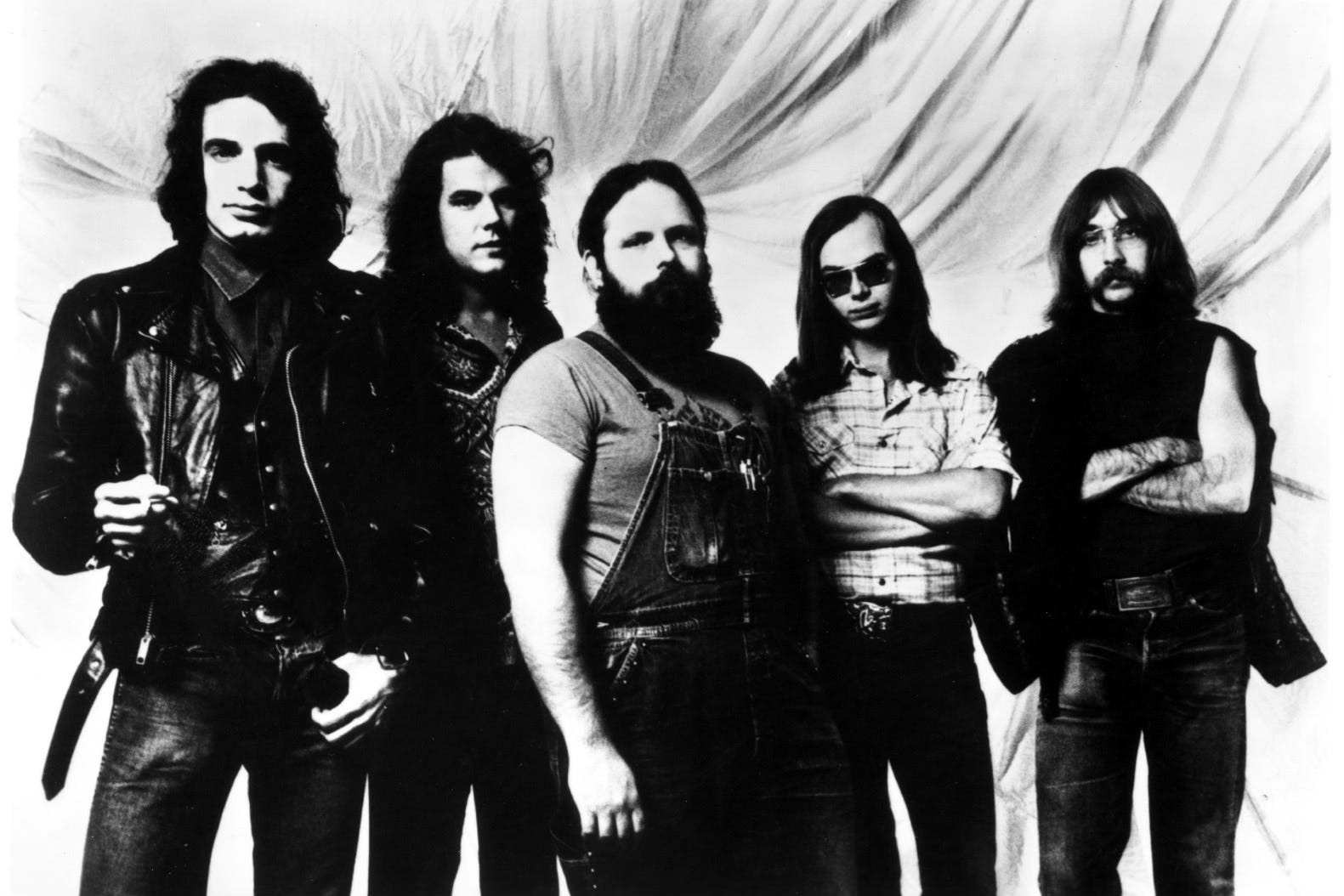
Pictured: Steely Dan in 1974, From L to R: Donald Fagen, Jim Hodder, Denny Dias, Walter Becker, and the unmistakable moustache of Jeff “Skunk” Baxter.
Post Credit Scene
1977: Leonard Cohen described one incident where Phil Spector approached him, put his arm around him, and pressed a gun directly into his neck, saying “Leonard, I love you.” Cohen calmly pushed the gun away and said, “I hope you do, Phil.” He further alleged that Spector pointed his gun at some of the session musicians, which caused them to quit the “Death of a Ladies’ Man” project.
Spector’s idiocy with guns, and malice of heart, culminated in his second-degree murder of actress Lana Clarkson at his home in Alhambra, California in 2003, for which he was sentenced to only 19 years in prison. It was however a long enough stretch that Spector died while incarcerated.
Phil Spector was a terrible human being and will only be mentioned in this blog in passing, when discussing other artists. There will be no articles specifically about him or his accomplishments. (Other than this short one explaining why, of course.)