This Day in Music
A Sunday roast for a legendary band, a dedication to a legendary boxer, and a legendary singer is falling in love, on this day in music.

Releases
1971: Legendary jazz trumpeter, composer, and bandleader (didn’t I just write that very line yesterday?) Miles Davis releases his 63rd album, the fusion classic, “Jack Johnson.” It’s also the soundtrack to the documentary film by Bill Clayton titled Jack Johnson, and dedicated to the famous boxer, whose life story was an inspiration to Davis.
The record consists of only two tracks of 25-minutes in length, titled “Right Off” and “Yesternow,” both composed by Davis. It features, as was the norm for a Davis album, some of history’s most accomplished jazz musicians, including John McLaughlin (g), Herbie Hancock (or), Chick Corea (elp), Billy Cobham (d), Jack DeJohnette (d), and Dave Holland (eb), among others, and produced by legendary Columbia Records jazz producer Teo Macero, who produced upwards of 34 albums for Davis. Miles himself referred to the group as “the greatest rock and roll band you have ever heard.”
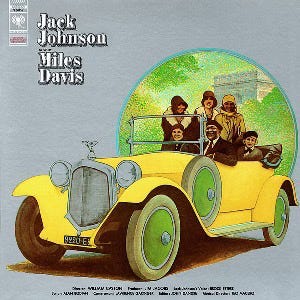
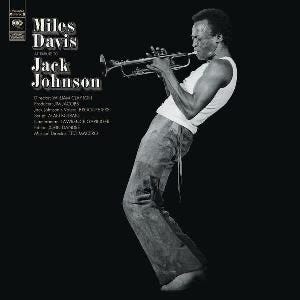
The album was released with little marketing and promotion, but the Miles Davis fan club was strong enough to send it to No. 4 on the Billboard Jazz Chart and No. 47 on the Billboard R&B Chart. Complicating its commercial viability, the first printing of the LP cover art used the wrong image, a stylized early-1970’s illustration of Johnson in his car, rather than a black-and-white photo of Miles in his classic bent-backward playing position against a black backdrop. Subsequent releases corrected the problem.
Contemporary reviews of the album were mixed, with Robert Christgau of The Village Voice ranking it A- and commenting that the work was “...lacking in the excitement of the best moments from Bitches Brew, but...coalesces its predecessor’s flashy ideas into one brilliant illumination.” Jazz journalist Leonard Feather remarked in the Los Angeles Times that it was a “...letdown after the unflawed triumph of Bitches Brew,” and criticized the band’s rhythm section as a “...thumping, clinking, whomping battering ram.” Uh…what!?
However, retrospective reviews properly acclaim the LP universally, likely because time enabled the reviewers to think past the groundbreaking work of “Bitches Brew” and accept the record on its own merits. Christgau upped his grade to A+, and reviews from AllMusic, Rolling Stone, The Guardian, and Blender all giving it their highest honours. Writing for The Penguin Guide to Jazz, which also provided its highest rating of 4-Stars, Richard Cook states “Jack Johnson stands at the head of what was to be Miles Davis’s most difficult decade, artistically and personally.”
“Jack Johnson” was Davis’s second film score, having previously written the music for Louis Malle’s 1958 French film, Ascenseur pour l’échafaud (Elevator to the Gallows). Music that would appear on Davis’s 1969 album, “In a Silent Way,” was used in the movie Symbiopsychotaxiplasm: Take One by William Greaves, released in 1968, though it was not composed specifically for the film.
1975: Led Zeppelin releases their sixth studio album, and first double-album, “Physical Graffiti,” a record that many Zeppelin fans consider to be the band’s best output.
The group took up residence in early 1974 at an old workhouse in Headley (Hampton), England, named Headley Grange, to allow themselves time and flexibility to write and arrange new songs. Without being on the studio clock, the band could experiment with arrangements and engineering techniques. After recording eight new songs, they had just under three sides of an album of new material prepared, and decided to augment those tunes with previously unreleased tracks from the sessions of their prior three records, “Houses of the Holy,” “Led Zeppelin” (often referred to as “IV”), and “Led Zeppelin III,” into a double-LP ultimately running 89 minutes.
The album was an instant commercial juggernaut, rocketing straight to No. 1 on the Billboard 200, No. 1 on the Canada RPM Albums Chart, No. 1 on the U.K. Albums Chart, and Top-5 across most Scandinavian and continental European countries. As it was released before the RIAA created the Platinum sales level, it was originally certified Gold, but was certified Platinum in 1990 and is now 16x Platinum in the U.S. It has also been certified multi-Gold and Platinum in several other countries, ultimately selling over ten million copies worldwide.
Critics also embraced the album, heaping much praise upon its release, with Christgau’s Record Guide grading it B+, AllMusic compiling five stars, The Daily Telegraph also rating it five stars, and in the March, 1975 issue of Billboard Magazine, it was described as "...a tour de force through a number of musical styles, from straight rock to blues to folky acoustic to orchestral sounds.”
Over the years, the LP has received 15 prestigious accolades from industry groups in the U.S. and U.K., including a Grammy nomination in 1976 for Best Packaging, a ranking of No. 144 on Rolling Stone’s 500 Greatest Albums of All Time in 2020, listed at No. 47 on Mojo’s 1996 list of the 100 Greatest Albums Ever Made, and No. 7 on the list of 100 Greatest British Rock Albums Ever, compiled by Classic Rock in 2006.
Like all Led Zeppelin records, it was produced by Jimi Page. It features some of the band’s most famous songs, including “Kashmir” and “Ten Years Gone” (two of my personal favourites), plus “In My Time of Dying” and “Houses of the Holy,” which was one of the previously unreleased tracks from the “Houses of the Holy” recording sessions, as the name suggests.
Ian Stewart, who was an original member of The Rolling Stones, and continued to be a session player on their albums and tours, plays piano on the song “Boogie with Stu,” which itself was a riff on an old song by Ritchie Valens.
Events
1963: The Rolling Stones become the new Sunday house band for the Station Hotel in southeast London. Their fee was £24, split six ways (Mick, Keith, Brian, Ian, Bill, and Charlie), and a Sunday roast dinner.
The Daily Elvis
1962: "Can't Help Falling In Love," from the soundtrack album to the movie Blue Hawaii, becomes Elvis’s 10th chart-topping single in the U.K., where it would be certified 2x Platinum.
Pictured: The original erroneous cover of Miles Davis’s Jack Johnson, followed by the proper cover. The stylized image of JJ in his car then became the back cover.