This Day in Music
Michael Fitzgibbon
A blue band, a blue mood, and Elvis needs love, on this day in music.
On the Threshold of a Dream
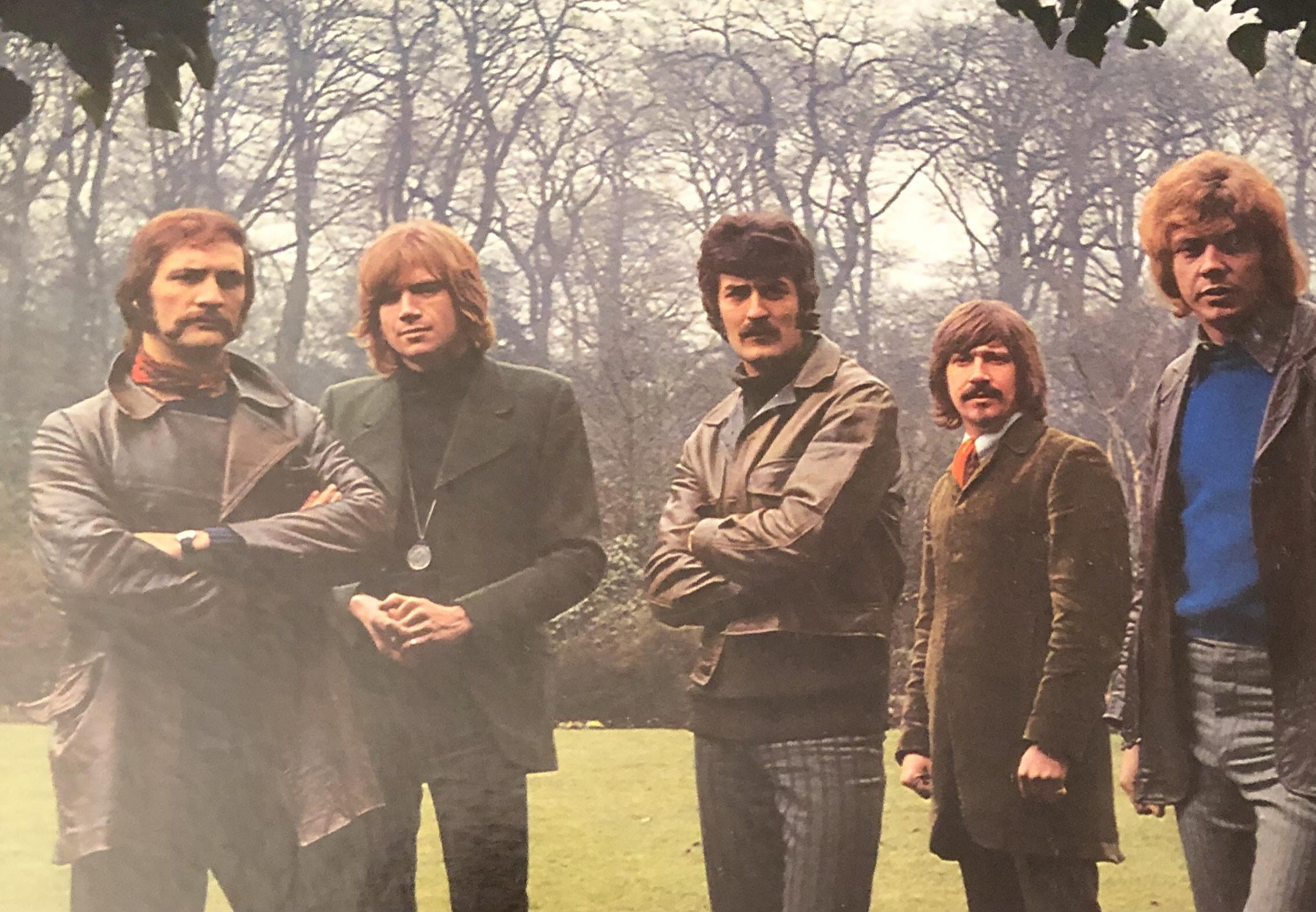
1969: English semi-prog, semi-psych, semi-pop (yes, three semis!) rock band The Moody Blues release their fourth studio album, “On the Threshold of a Dream.” A time of prolific output for the band, the record came only nine months following its predecessor, “In Search of the Lost Chord,” and would be followed-up just seven months later with “To Our Children’s Children’s Children.”
The album was a huge hit with audiences, becoming their first No. 1 in the U.K., and it was certified Platinum in the U.S. It also reached No. 1 in France. Its highest U.S. chart position was No. 20 on the Billboard 200.
Most critics praised the album, exemplified by AllMusic’s 4.5-Star rating, but Robert Christgau of The Village Voice didn’t concur, and graded it D-. He’s wrong though, this is a good album.
The one single from the LP was the great track, “Never Comes the Day,” which only charted in Canada, reaching No. 74. The single edit of the song was about half as long as the album version, which made it completely different and less impactful. Though not released as a single, another great track, “Lovely to See You,” received significant radio play. Other great songs include the deep tracks “Lazy Day,” “Are You Sitting Comfortably,” “In the Beginning,” and “Have You Heard,” parts one and two.
The LP’s psychedelic cover art was created by Phil Travers, who did several covers for the band. It’s the first Moody Blues release to feature a gatefold jacket, allowing space for more of the artwork.
In the Wee Small Hours
1955: Legendary American crooner Frank Sinatra releases his ninth studio album, the seminal “In the Wee Small Hours.” Produced by Voyle Gilmore and arranged by Nelson Riddle, the songs reflect themes of lost love, failed relationships, melancholy, and nightlife.
The record’s artwork perfectly reflects the music, depicting Sinatra in a suit and fedora by the lamplight glow of a city at night, all of it under a filter of blue.
Receiving universal critical acclaim upon its release, it has since become a legacy recording, influencing generations of singers that followed. It was also one of the first albums to shift from simply being a group of songs, to focusing on a theme, and becoming an art form in itself.
It appears in several best of archives, including No. 282 on Rolling Stone’s 500 Greatest Albums of All Time (c) 2020, No. 54 on Blender’s 100 Greatest American Albums of All Time, and Time’s All Time 100 Albums, among many others. It’s also popular with fans, receiving Gold certification from The RIAA for selling over 500,000 copies, a huge number for a vocal jazz album.
The LP is a collection of great American songs in a thematic presentation, featuring the title track, “In the Wee Small Hours of the Morning,” written by Bob Hilliard and David Mann, “Mood Indigo” by Duke Ellington, Cole Porter’s “What Is This Thing Called Love?,” “It Never Entered My Mind,” by Richard Rogers and Lorenz Hart, and “This Love of Mine,” co-written by Sinatra and Sol Parker.
Rikki Don’t Lose That Number
1974: “Rikki Don't Lose That Number,” the first single from the Steely Dan album “Pretzel Logic,” is released. With the usual great writing and talented musicianship of a Steely Dan record, and a great guitar solo by Jeff “Skunk” Baxter, the song was a hit with listeners and became the Dan's most successful single of their career. It reached No. 4 on the Billboard Hot 100, and No. 3 in Canada.
The Daily Elvis
1959: The Elvis single, “I Need Your Love Tonight,” written by Sid Wayne and Bix Reichner, reaches No. 4 on the Billboard Pop Singles Chart.