This Day in Music
Michael Fitzgibbon
A diver down, an oracle, and big science are all gathered in the Hyacinth House while Elvis is the prize in a contest, on this day in music.
L.A. Woman
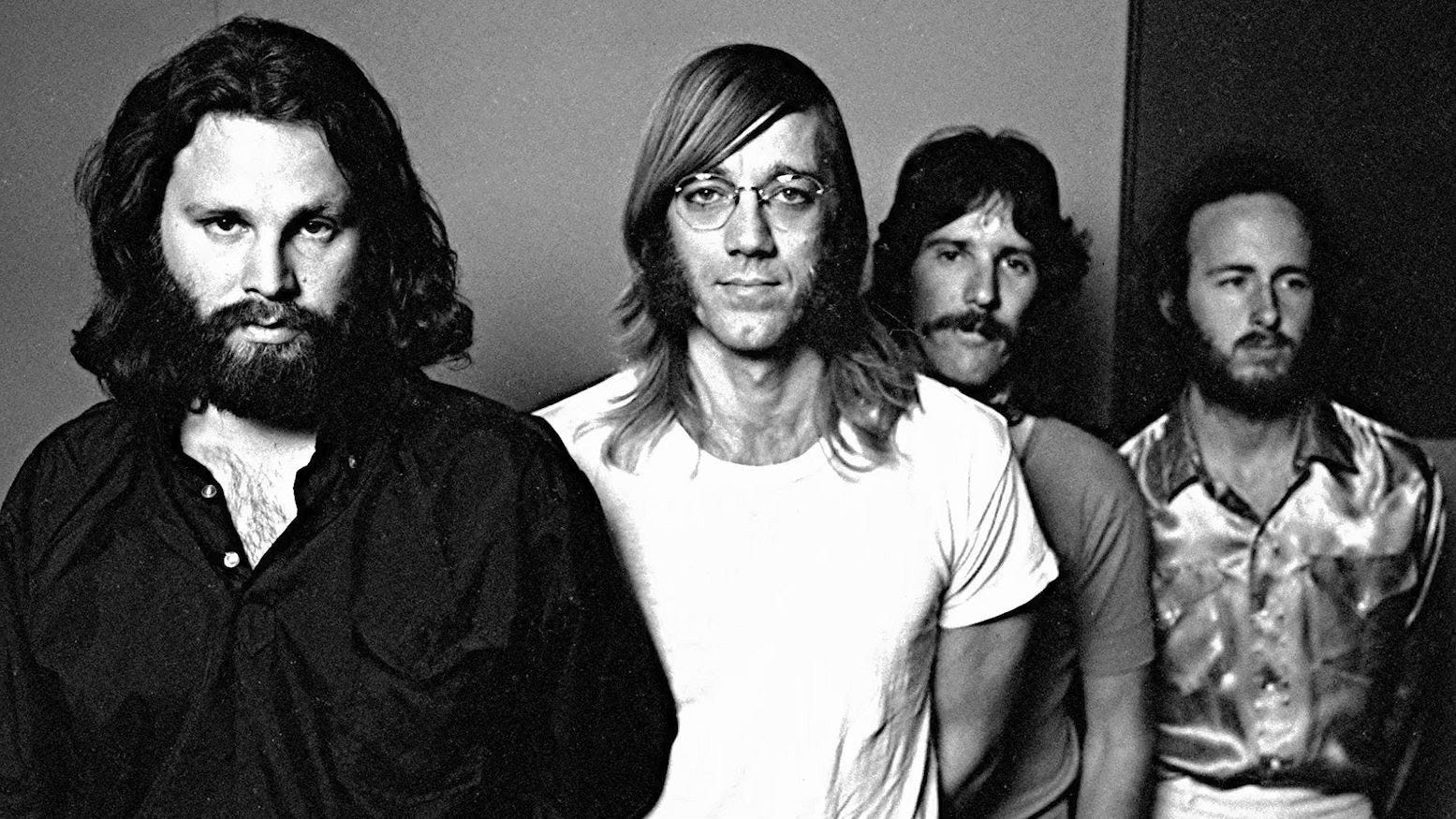
1971: One of the best American bands of the 1960's, The Doors, release their sixth studio album, “L.A. Woman.” It would be the last album by the group to feature legendary frontman Jim Morrison during his lifetime, who died only two and half months after its release. Morrison’s spoken-word recordings would form the basis of The Doors' ninth and final studio album, “An American Prayer,” in 1978.
Arriving after a period of blacklisting by many radio stations and performance venues due to Morrison's arrest and subsequent conviction for profanity and indecent exposure in Miami in 1970, it was met with widespread critical acclaim. Robert Christgau of The Village Voice remarked, “the band has never sounded better” in his A- review of the work. On Metacritic, the record enjoys a 93/100 rating.
A collection of ten blues-influenced tracks, the music was composed in-studio by the band itself, now free of the acrimonious relationship with producer Paul A. Rothchild. The highlights include the first single, “Love Her Madly,” the ethereal second single, “Riders on the Storm,” the epic eponymous track, “L.A. Woman,” and an excellent cover of John Lee Hooker's “Crawling King Snake.”
The LP’s best moment however is the beautifully sad lament, “Hyacinth House,” which revealed Morrison's state of mind at the time: “Why did you throw the Jack of Hearts away? It was the only card in the deck that I had left to play.”
The album peaked at No. 9 on the Billboard 200 and was certified 3x Platinum in America. Worldwide, it sold five million copies and was certified multi-Platinum in several countries. It ranks No. 364 on Rolling Stone's 500 Greatest Albums of All Time (c) 2012, is arguably the best work from The Doors, and is truly one of the great releases of the Rock and Roll Oeuvre.
Diver Down
1982: Van Halen releases their fifth studio album, “Diver Down.” A short album featuring five cover songs including Roy Orbison's “(Oh) Pretty Woman” and The Kinks' “Where Have All the Good Time Gone,” the original-composition highlights are the instrumental “Intruder,” and the pop-rock number, “Little Guitars.”
A commercial success, it peaked at No. 3 on the Billboard 200 and was certified 4x Platinum in the U.S.
Odessey and Oracle
1968: “Odessey and Oracle,” the classic collection of late-60's psychedelia by The Zombies is released. Receiving universal critical acclaim, it was not a chart success other than the single “Time of the Season,” but ultimately became a cult classic that influenced dozens of other musicians in the decades that followed.
Note: The incorrect spelling of “Odyssey” is the band’s, not mine. That’s the way it is spelled on the album cover. It was an error in design, though the band tried to explain it as intentional.
Big Science
1982: American performance artist and musician Laurie Anderson releases her first studio album, “Big Science,” a selection of musical highlights from her yet-to-be-performed eight-hour magnum opus, “United States Live,” a multi-media performance-art saga about life in the U.S.
The LP features an unexpected hit single, “O Superman (For Massenet).” “United States Live” would be performed at the Brooklyn Academy of Music on February 7th to 10th of 1983, and subsequently released as a five-disc LP box set.
Receiving widespread critical acclaim, “Big Science” reached No. 7 in New Zealand, and No. 29 in the U.K.
Welcome Back
1976: John Sebastian releases his third post-Lovin' Spoonful studio album, “Welcome Back.” The title track went to No. 1 on the Billboard Hot 100, and was written as the theme song to the ABC TV show, Welcome Back, Kotter.
The Daily Elvis
1959: With Elvis in the U.S. Army serving in Germany, Col. Tom Parker cooked up a promotional contest with a German magazine to give away “A Day with Elvis.” Four lucky German teenage girls spent a supervised afternoon with Elvis on this day in music history.