This Day in Music
Michael Fitzgibbon
Two releases that should have been triple-albums all along, the best band you never heard in your life is back, and Elvis times two, on this day in music.
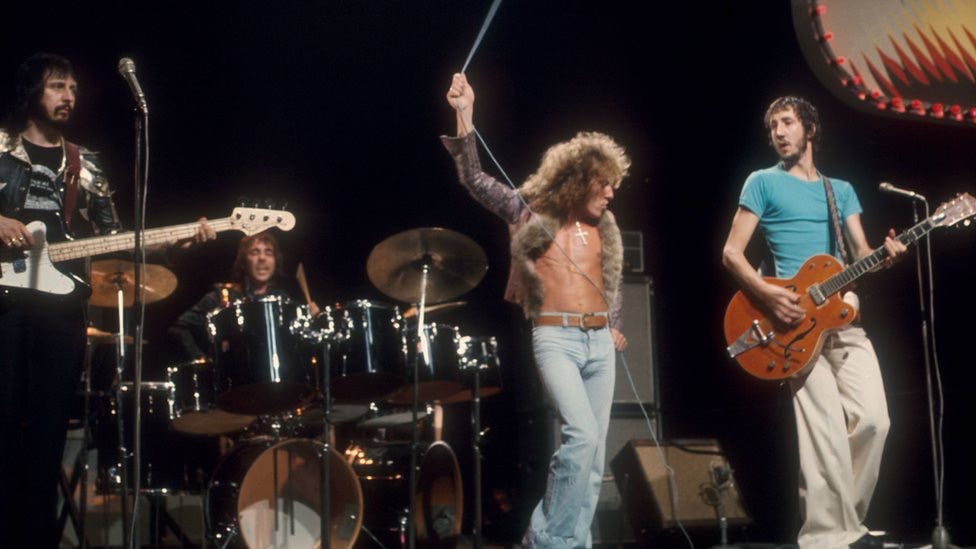
Live at Leeds
1970: Legendary British mod rockers The Who release their first contemporary live album, the seminal “Live at Leeds,” recorded at The University of Leeds Refectory on February 14, 1970.
The Who had been recording their shows on that tour with the intent of creating a live album, but were unsatisfied with the sound. The concert at Leeds was added specifically to arrange a proper recording set-up. At just over 37 minutes in length, the resulting LP, though excellent in sonic quality, is entirely too short, and three of the six tracks are cover tunes.
Compensating for the brevity and lack of original material is the fantastic performance. Critics praised the album, with AllMusic, Blender, Mojo, The Rolling Stone Album Guide, and The Encyclopedia of Popular Music all rating it 5-stars, and Entertainment Weekly grading it A+. Even Robert Christgau of The Village Voice graded it a begrudging B, taking issue with the just-under 15-minute length of “My Generation,” which is actually the highlight of the LP.
Also a commercial success, the record sold over two million copies and peaked at No. 4 on the Billboard 200, No. 3 in the U.K., and No. 2 in Canada. “Live at Leeds” is routinely considered one of the best live albums in Rock and Roll history.
The feature of the tour was their double-album rock opera “Tommy,” which had been released the year before, in May of 1969, with the group playing a near-entire performance of the piece at every concert. The omitted tracks were “Cousin Kevin,” “Underture,” “Sensation,” and “Welcome.” “Live at Leeds” includes none of the “Tommy” tracks, along with leaving off several non-Tommy songs played in the first half of the show.
In 1995, a double-CD deluxe edition of the album was released that included all 13 non-Tommy tracks, and all of the “Tommy” tracks. In 2016, a triple-live album on 180g remastered half-speed vinyl was released, which includes nine of the non-Tommy songs and all 20 of the “Tommy” numbers.
For me, the 3LP version is the definitive “Live at Leeds” record, and what should have been issued way back in 1970. Today, I’ll probably listen to the original and the 3LP versions.
Electric Music for the Mind and Body
1967: “Electric Music for the Mind and Body,” the debut album from American psychedelic rock band Country Joe and The Fish is released. Founded by Country Joe McDonald and Barry “The Fish” Melton, the group was one of the first to release music from the soon-to-be influential San Francisco psychedelic scene.
Received warmly by critics, the LP was rated just under 5-stars by AllMusic and is included in Robert Dimery’s reference book, 1001 Albums You Must Hear Before You Die. Though no singles were released, the songs “Section 43,” “Grace,” and “Not So Sweet Martha Lorraine” were in rotation on progressive FM stations in the Bay Area, and then caught-on further afield. The band is famous for performing at The Woodstock Music and Art Fair in 1969.
Interestingly, the soundtrack to the movie about The Woodstock Music and Art Fair, which includes one track by Country Joe and The Fish, “Rock and Soul Music,” along with a Country Joe solo track, “The Fish Cheer / I-Feel-Like-I’m-Fixin’-to-Die Rag,” was also released on this day in music in 1970.
Shut Up and Play Yer Guitar
1981: Legendary American composer Frank Zappa releases three albums: “Shut Up 'N Play Yer Guitar,” “Shut Up 'N Play Yer Guitar Some More,” and “The Return of the Son of Shut Up 'N Play Yer Guitar.”
All three albums were created from the same idea that formed the basis of two other FZ albums previously discussed in this blog, “Guitar” and “Trance-Fusion,” though these three were the first to be issued.
Each album is made up of ten songs that were created by a live extended guitar solo originally part of another song. For example, the first track on the first record, “five-five-FIVE” was originally part of the song, “Conehead,” from the album, “You Are What You Is,” though the live performance from which “five-five-FIVE” was created was at Hammersmith Odeon, London, in 1979, two years before “You Are What You Is” was released.
Zappa provides the source song and which guitar he played for the solo for each of the tracks, turning the record sleeves into excellent historical records.
Frank would recognize that the three separate albums should really be one package, so in September of 1982, he re-issued them as one boxed set simply titled, “Shut Up 'N Play Yer Guitar.”
The Return of the Son of More Zappa Trivia
1988: Frank Zappa performs at the Hallenstadion in Zürich, Switzerland, backed by “The Best Band You Never Heard in Your Life,” Zappa's nickname (and title of a live album form this tour) for his backing band, which imploded shortly after beginning the U.S. leg of the ill-fated 1988 tour. A 23-song concert covering most of Zappa's career, the highlight performances included “The Orange County Lumber Truck,” “Trouble Every Day,” and “Legend of The Illinois Enema Bandit.”
What Were Arthur Godfrey’s Talent Scouts Thinking?
1957: Buddy Holly and The Crickets audition for CBS-TV show Arthur Godfrey's Talent Scouts, but are rejected. Also rejected at that audition? Elvis! That shows how much the talent scouts at Arthur Godfrey's Talent Scouts knew about scouting talent.
The Monday Miles
1956: John Coltrane (ts), Red Garland (p), Paul Chambers (b), and Philly Joe Jones (d) join Miles Davis (t) at the legendary Van Gelder studios in Hackensack, NJ, for a recording session that, along with additional sessions on October 26, 1956, would produce four of Miles’s “…in’” albums: “Relaxin’ with The Miles Davis Quintet,” “Steamin’ with The Miles Davis Quintet,” “Workin’ with The Miles Davis Quintet,” and “Cookin’ with The Miles Davis Quintet.” All four are seminal LP’s of the hard-bop subgenre.
Preamble to The Daily Elvis
Many jazz albums are titled “[Jazz Great] Meets [Jazz Great],” for example the great LP’s “Art Pepper Meets The Rhythm Section” (i.e. Miles Davis’s rhythm section), and “Louis Armstrong Meets Oscar Peterson.” With that in mind…
The Daily Elvis
1974: At the Inglewood Forum in Los Angeles, Elvis meets Led Zeppelin, as the band was in attendance at his concert. Though they spent over two hours hanging out backstage, they did not record any music together, so a legendary “Elvis Meets Led Zeppelin” jazz album never came to be.