This Day in Music
Three of the most prominent musicians in modern history, and Elvis is taking a hayride, all on this day in music.

Releases
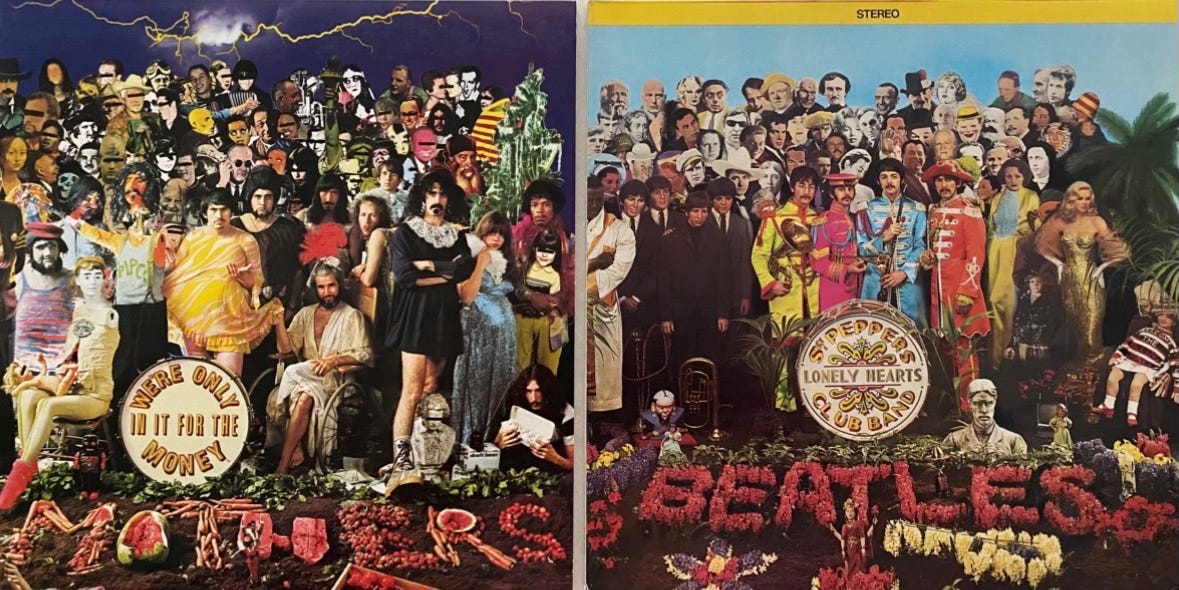
1968: Avant-garde American rockers The Mothers of Invention release their third studio album, “We're Only in It for the Money.” Produced by band founder, leader, and composer, Frank Zappa, it was notable for its cover, an elaborate and hilarious parody of The Beatles' “Sgt. Pepper's Lonely Hearts Club Band,” designed by long-time band illustrator Cal Schenkel with Jerry Schatzberg.
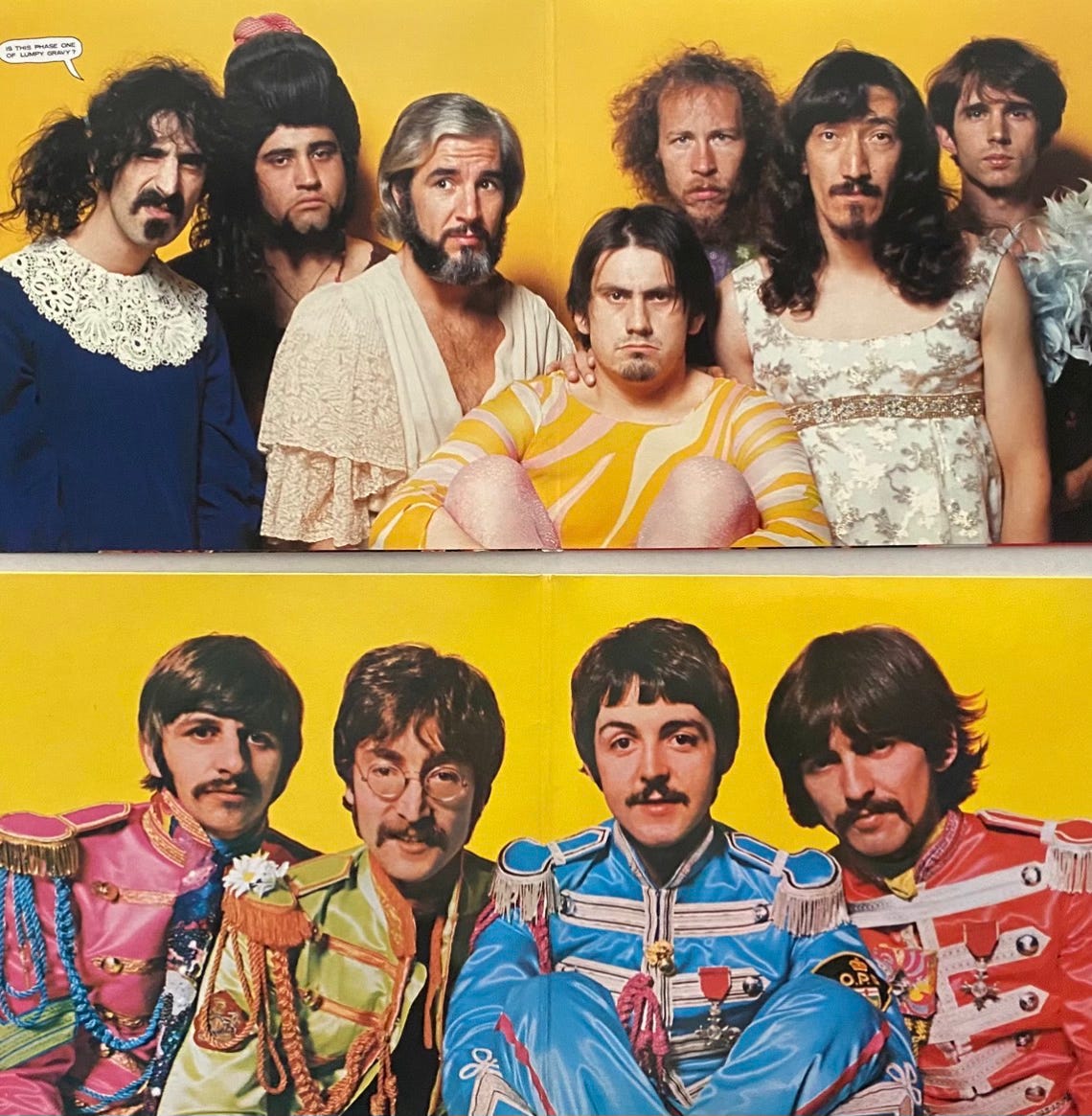
Though Zappa had discussed and received permission from Paul McCartney to do the parody, Capitol Records, The Beatles' U.S. distributor, objected, which delayed the record's release by five months, and ultimately caused Zappa’s label Verve to release it with the planned inside gatefold artwork as the cover, and the parody inside the fold. This caused a second problem: Only half of the inside gatefold picture would fit on the front cover, thereby ruining the intended effect of mimicking the inside gatefold of “Sgt. Pepper’s Lonely Hearts Club Band.”
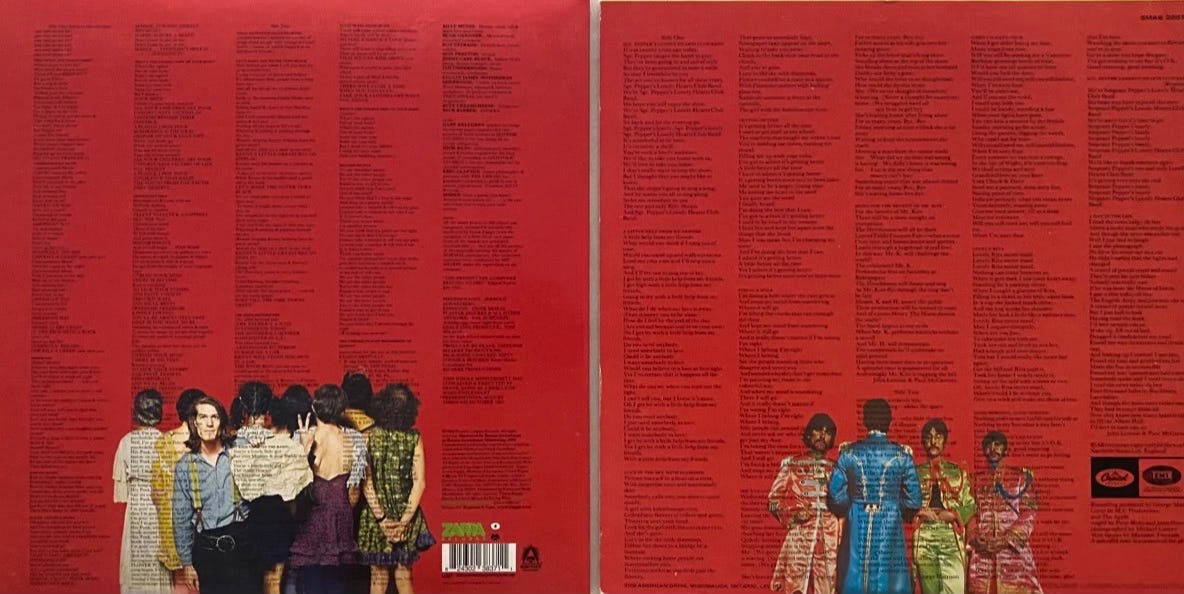
Re-releases of the album would have the proper packaging, which was the front cover parody on the front cover, the inside gatefold mimic on the inside gatefold, and the back cover design using a picture of the band and including the lyrics, just as The Beatles did on “Sgt. Pepper.” However, on “…Money” all of the band is turned away from the camera except for saxophonist Euclid James “Motorhead” Sherwood, whereas The Beatles are facing the camera with the exception of Paul McCartney, who is turned away. (Which made up one piece of “evidence” in the incredibly ridiculous conspiracy theory that the original Paul died and was replaced by an equally-talented doppelgänger.)
Critics were impressed, with AllMusic and The Rolling Stone Record Guide each ranking it 5-stars, and the ever hard-to-please Robert Christgau of Village Voice rating an A, stating, “With bohemia permanent and changed utterly, this early attack on its massification hasn't so much dated as found its context. Cheap sarcasm is forever.” The record-buying public was also impressed, sending the LP to No. 30 on the Billboard 200.
“We’re Only in It for the Money” was part of a much larger project titled No Commercial Potential, from which FZ eventually cut four albums: “…Money” (FZ No. 4), “Lumpy Gravy” (FZ No. 3), “Cruising with Reuben & The Jets” (FZ No. 5), and “Uncle Meat” (FZ No. 6), which was the soundtrack for the movie of the same name, released incomplete in 1987. Official Release No. 4 was actually released before Official Release No. 3 due to the delay caused by the cover art.
On the question of the record being a concept album, Zappa remarked that all four works were “…all one album. All the material in the albums is organically related and if I had all the master tapes and I could take a razor blade and cut them apart and put it together again in a different order it still would make one piece of music you can listen to. Then I could take that razor blade and cut it apart and reassemble it a different way, and it still would make sense. I could do this twenty ways. The material is definitely related.” FZ would later coin the term “conceptual continuity” to describe the interconnected themes across several of his songs and albums, sometimes over many years.
The album’s tracks are very short as they advance narrative. Some of the standout numbers include “Concentration Moon,” “What’s the Ugliest Part of Your Body” (Spoiler alert: it’s your mind), “Absolutely Free” (also the title of the MOI’s second album), “Flower Punk,” “Let’s Make the Water Turn Black,” “Mother People” (for which FZ played a car as an instrument on an episode of The Monkees), and “The Chrome Plated Megaphone of Destiny,” though the entire album is simply fabulous.
1946: Columbia Records releases the first album by legendary crooner Frank Sinatra. A set of four 78-RPM discs totalling eight songs, it was titled, “The Voice of Frank Sinatra.” It peaked at No. 1 on the Billboard Albums chart, which debuted only the year before.
1957: Legendary trumpeter, bandleader, and composer Miles Davis releases the modern jazz classic, “‘Round About Midnight,” his first album for Columbia Records, and his 25th album in total.
Miles’s albums for prior label Prestige had mostly been no-rehearsal, first-takes. However, for “‘Round About Midnight,” Miles took advantage of the high-ceilings and modern technology of Columbia’s (CBS at the time) 30th Street Studios in Manhattan, and conducted three long sessions, then carefully selected the best recordings from each to splice together the record. The result was a hard-bop album that vaulted Miles beyond the strict domain of jazz fans, to a more mainstream audience.
Produced by George Avakian with Teo Macero mastering the LP, the featured musicians comprised Miles’s First Great Quintet, including standout performances by Miles himself (t), John Coltrane (ts), Red Garland (p), Paul Chambers (b), and Philly Jo Jones (d).
The record achieved near-universal acclaim from critics, with most reviewers assigning it 5- or 10-Stars, depending on scale, or letter grades of A and A+. DownBeat magazine reviewer Ralph Gleason described the album as “modern jazz conceived and executed in the very best style.” Writing for Cadence, Bob Rusch stated, “Everything about this date, from the black-and-white cover photo, washed in red, of Miles Davis, removed in thought behind dark glasses, to the performances, is classic. Not surprisingly, careful packaging and exquisite artistry have created a legend and, in this case, one of the essential recordings in the history of recorded music.” There were some who thought the album less-than-perfect, however. The Penguin Guide to Jazz only rated it 3/4-Stars, publishing that “the material is fine but somehow fails to cast quite the consistent spell which the Prestige recordings do.”
Prestige was a label for which Miles made 14 albums, including “Miles,” “Relaxin’,” “Workin',” “Steamin’,” and “Cookin’.” He recorded with Columbia while still under contract with Prestige as Miles had made the arrangement to release the Columbia LP’s after the expiration of his Prestige contract, the promotion of which would benefit both labels.1
The record includes the would-be standard, “‘Round Midnight” by Thelonious Monk, the classic “All of You” by Cole Porter, and the traditional, “Dear Old Stockholm” by Stan Getz.
So why is the album titled “‘Round About Midnight” but the song is simply “‘Round Midnight?” According to producer George Avakian, “The word “about” does not appear in the lyric which Bernie Hanighen set to Thelonious Monk’s melody. He wrote the words after the song had already been copyrighted as “‘Round About Midnight” (including the apostrophe), and the publisher insisted that I print the album title to conform with the copyright. Many musicians and fans still think it’s an error or an affectation.”
The Daily Elvis
1955: Elvis performs on the radio show Louisiana Hayride at KWKH studios in Shreveport, Louisiana.
Pictured
High-res images of both “Money” and “Sgt. Pepper” were not found online, so your humble narrator pulled the two albums from his vast library of auditory vinyl, whipped out his trusty iPhone, and took sort-of-okay pictures for your comparative viewing pleasure.
The front covers of both albums.
The inside gatefolds.
MOI: The cloud quote by Zappa references how the album was originally part of “No Commercial Potential.” From L to R: Frank Zappa (g; p: v), Billy Mundi (d), Bunk Gardner (woodwinds), Roy Estrada (bg; v) Don Preston (key; v), Jimmy Carl Black (d; v; Indian of the Group), and Motorhead Sherwood (ss; bs).
The Beatles: From L to R: Ringo Starr (d; v), John Lennon (g; p; v), Paul McCartney (g; bg; p; v), and George Harrison (g; v). McCartney is wearing a patch representing the Ontario Provincial Police on his left arm. This was also “evidence” in the conspiracy, ostensibly revealing that the new Paul McCartney was from Ontario, Canada. In reality, it was gifted to Paul during a trip to Canada in 1966 and just liked it.
The back covers.
It is sometimes difficult to find or discern between recording dates and release dates for Miles Davis albums. This blog uses the order of releases as displayed at the official Miles Davis website, and even then, some details don’t line up chronologically with other sources. We regret any errors and would appreciate corrections from Davis historians.