This Day in Music
The Turtles meet The Mothers of Invention, and a huge box set of Elvis CD's is released, on this day in music.

Releases
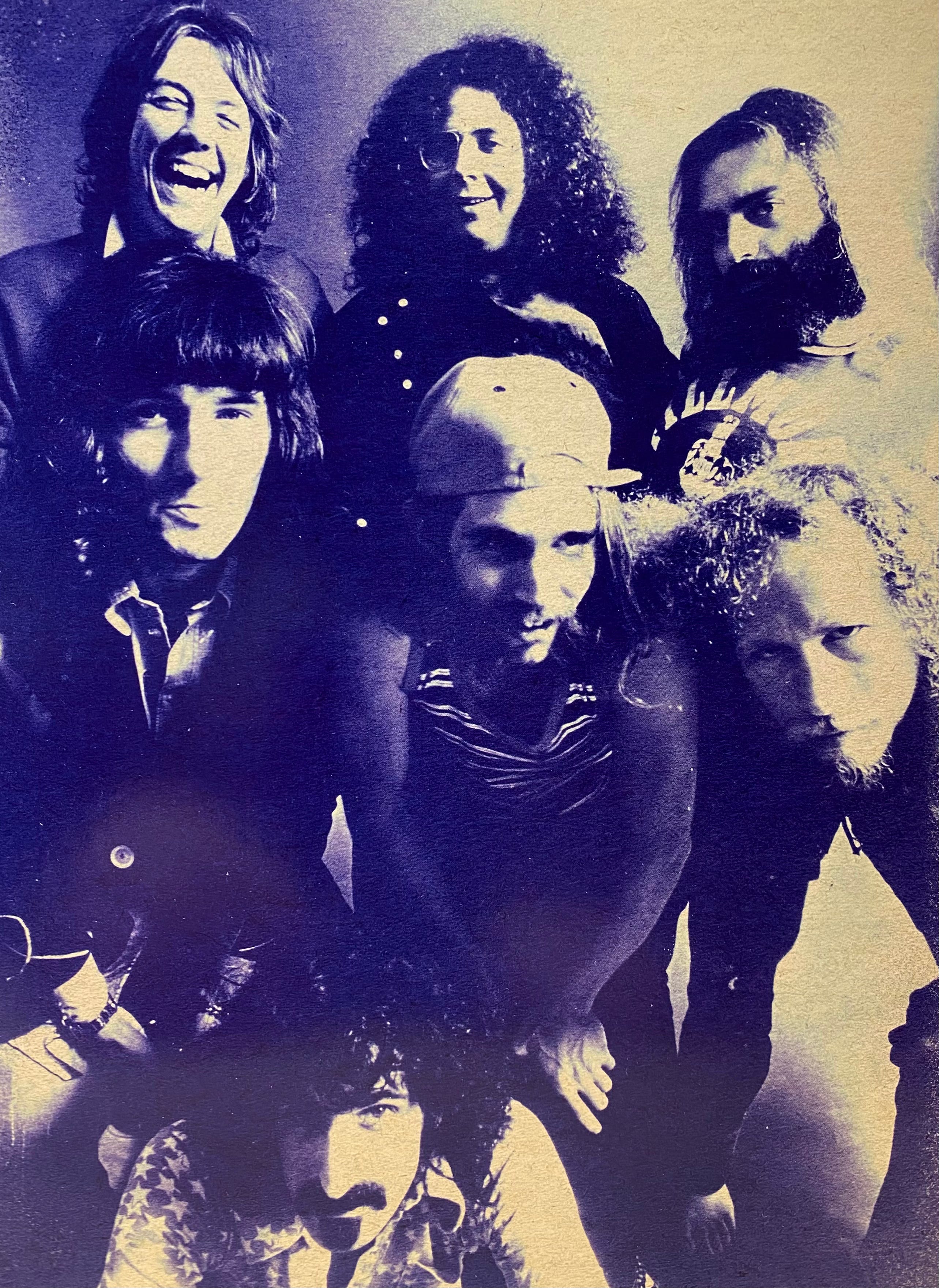
2022: Universal Music Group posthumously releases the triple-live album “Rainbow Theatre London,” by Frank Zappa and billed as Frank Zappa & The Mothers. It is the full concert recording from the band's performance at London's Rainbow Theatre on December 10, 1971.
This lineup of the Mothers featured FZ (g; vox), Mark Volman and Howard Kaylan, together known as “Flo & Eddie” (vox), Jim Pons (bg), Don Preston (p), Ian Underwood (key; ts), and Aynsley Dunbar (d). The tour ended in complete disaster.
The beginning of that end came on December 4th in Montreux, Switzerland. While performing “King Kong” during a concert they were recording using The Rolling Stones' mobile recording truck, an audience member set off a flare, igniting a fire that consumed the entire venue. Deep Purple immortalized the incident in their song, “Smoke on the Water,” with the lyric, “…some stupid with a flare gun; burned the place to the ground,” the band being affected by the incident because it caused the cancellation of their own concerts. As for The Mothers, they lost of all their equipment in the conflagration and had to cancel shows in France and Belgium.
By the time they got to London, if the frustration of poorly-functioning new equipment wasn't bad enough, during a performance of The Beatles' “I Want to Hold Your Hand” as an encore, a crazed audience member, jealous over his belief that Zappa was flirting with his girlfriend, rushed Zappa and knocked him off the stage. Zappa fell three meters into the orchestra pit, breaking his leg in several places, and causing a concussion, lost consciousness, and other injuries.
The incident led to the cancellation of the tour, and ultimately the dissolution of that version of The Mothers, as Zappa focused on his solo projects while convalescing. Among other recordings during this time, he produced the albums “Waka/Jawaka” and “The Grand Wazoo.”
1974: “Rush,” the debut studio album from Canadian hard-rock band Rush, is released. It is the only album to feature original drummer John Rutsey, who left the band because he did not enjoy touring, which was complicated by his health. The band had to recruit a new drummer, fatefully choosing a tall geek from St. Catherines, Ontario, named Neil Peart.
Though the LP is a solid collection of hard rock songs, critics were not impressed and it received poor reviews. The record-buying public, however, had a different opinion, increasing the band's fan base and sending the record to Gold certification in Canada, and eventually to Gold in the U.S.
The tracks “Working Man,” “In the Mood,” and “Finding My Way” were staples of Rush's live performances for 40 years, right up to their very last show before retirement on August 1, 2015 at The Forum in Los Angeles.
The boys would persevere through those critically difficult times to become legends, founders, and influencers of the progressive hard rock and metal scene.
1977: American punk-rocker Iggy Pop releases his debut studio album, “The Idiot,” to modest commercial success and universal critical acclaim.
Produced by David Bowie, who at the time was a fountainhead of musical innovation and prolificacy, it was recorded at Château d'Hérouville, an 18th century castle in Hérouville-en-Vexin, France, and a popular recording spot at the time. It was nicknamed Honky Château, and is where Elton John recorded his famous album of the same name.
Bowie, who was working on his album “Low,” the first of what would become his Berlin Trilogy, at the same studio, had moved to Europe with Pop so the two could help each other kick their drug habits. Production of “The Idiot” was then moved to Musicland Studios in Munich to complete the album. (Bowie would subsequently go to Hansa Studios in West Berlin to complete “Low.”)
Reviews were glowing. AllMusic ranks “The Idiot” at 5-Stars, NME rated it 8/10, and Robert Christgau of the Village Voice graded it A-. With all tracks co-written by Pop and Bowie, and the great singles, “Nightclubbing,” “Funtime,” and “China Girl,” fans sent the record to No. 30 on the U.K. Albums chart.
Bowie would record his own version of “China Girl” for his fantastic 1983 album, “Let's Dance.” It's a prime example of two versions of a song being equally good and showcasing each individual performer’s style.
2003: American blues rockers The Allman Brothers Band release their 17th album, “Hittin’ the Note.” Their first studio album in nearly ten years, it was produced by guitarist Warren Haynes with famous producer Michael Barbiero for Sanctuary Records, and released on the group’s Peach label. It is the only studio album with both Derek Trucks and Warren Haynes, and without founding-member Dickie Betts.
Critics were impressed, as they should be, because this is a fantastic album. Allmusic compiled a near-5-Star rating, though Rolling Stone missed the mark with a 3-Star review. Writing for The Music Box, John Metzger said, “... the Allman Brothers Band has persevered and with the release of its new album…the group has found a way to return to greatness.” It reached No. 67 on the Billboard 200.
Though the album did not get much radio play, it features some of the band’s best output, including the songs “Firing Line,” “High Cost of Low Living,” the superb “Desdemona,” the guitar/bass epic, “Instrumental Illness,” and a great cover of The Rolling Stones’ “Heart of Stone.”
The album’s title was an homage to late founding-member Berry Oakley, who first used the term “hittin’ the note” to describe those moments when the band was at the apex of its musical performance and camaraderie. The rest of the band picked-up on it and the phrase became an aspiration for the group.
“Hittin’ the Note” is among the ABB’s five-best studio-only records and should be heard by all music listeners.
The Daily Elvis
2016: Record label Legacy Recordings releases "Elvis Presley: The Album Collection," a 60-CD box set of all the albums Elvis recorded for RCA during his lifetime.
Pictured: Frank Zappa & The Mothers at The Rainbow Theatre. Back row from L to R: Jim Pons, Mark Volman, and Howard Kaylan. Middle row, from L to R: Aynsley Dunbar, Ian Underwood, and Don Preston. Bottom row: Frank Zappa.