This Day in Music
Commemorating three distinctly different jazz-fusion works, top-billing for The Monday Miles, and Elvis commemorates the USS Arizona, on this day in music.

The Monday Miles
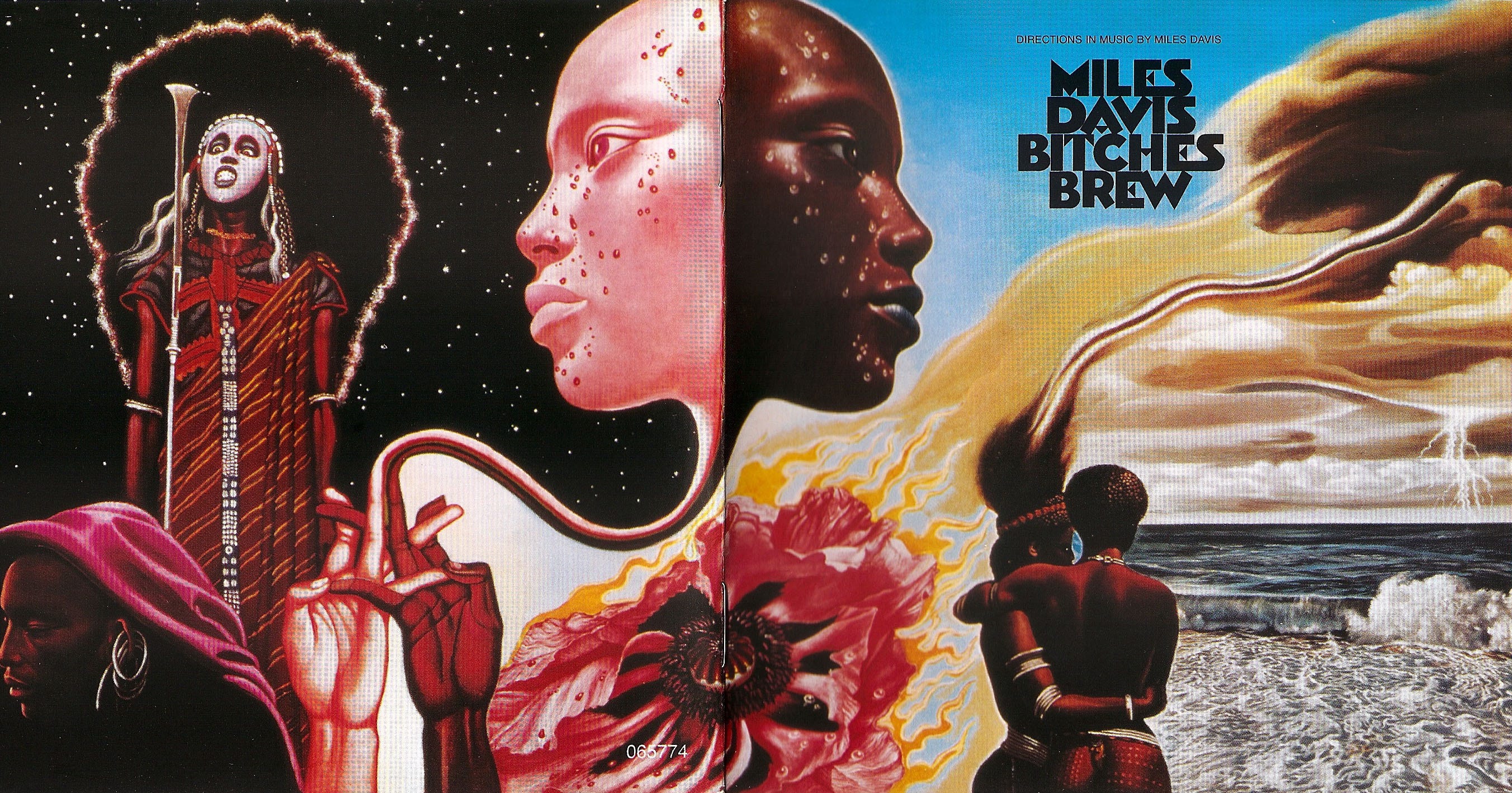
1970: Legendary American jazz trumpeter, composer, and bandleader Miles Davis releases his 61st album, the seminal double-LP masterpiece, “Bitches Brew.” All tracks are written by Miles except for two, “Pharaoh’s Dance” by band member Joe Zawinul (elp and always in the left-channel of the stereo mix), and “Sanctuary” by band member Wayne Shorter (ss).
Continuing his experimentation with electric instruments that he started on his previous release, “In a Silent Way,” he was able to depart from traditional jazz structures and embrace rock-influenced improvisations and arrangements, resulting in the birth of jazz-fusion.
With mixed reviews upon its release, a usual if not tiresome reaction by critics for a change in an artist’s direction, the album ultimately won over the critics to become a legacy recording, winning the 1971 Grammy for best Large Jazz Ensemble Album, going to No. 1 on the Billboard Top Jazz Albums chart, No. 35 on the Billboard 200 (a rare high position for a jazz record), reaching Gold certification in 1976 and Platinum certification in 2003 in the U.S. (also rare for a jazz LP), and Gold certification in the U.K.
Additionally, the album is ranked No. 94 on Rolling Stone’s 500 Greatest Albums of All Time (c) 2003, and included in Dimery’s 1001 Albums You Must Hear Before You Die. The Penguin Guide to Jazz notes in its 1992 review that the album is “...one of the most remarkable creative statements of the last half-century, in any artistic form.”
Though the title “Bitches Brew” has been claimed to be about women in Davis’s life who introduced him to the cultural changes of the 1960’s, there’s no corroboration of that assertion, and Davis never did reveal his inspiration. It does however make sense. The vibrantly-coloured surrealist cover art painted by the French-German artist Malti Klarwein adds to the mystique of the record.
All six tracks feature dual drum sets played in various combinations by Jack DeJohnette (right-channel), Lenny White (left-channel), Billy Cobham (left-channel) on “Feio” only, and Don Alias (left-channel when on drums; full mix on congas), along with additional percussion and congas by Juma Santos and Airto Moreira, providing an underlying percussive rhythm on which the melodies and improvisations stand.
In addition to Davis, Zawinul, Shorter, and the percussionists, the record includes performances by musicians Bernie Maupin (bcl), Chick Corea (right-channel elp), Larry Young on “Pharaoh’s Dance” and “Spanish Key” only (center-mix elp), John McLaughlin (g), Dave Holland (b; bg), and Harvey Brooks (bg).
Long-time Davis collaborator Teo Macero produced the LP for Columbia Records. This work is a must-listen; it was a revolution in jazz music.
FYI: Here’s an occasional reminder of where to go to learn the short-form instrumentation notations used in this blog: Noal Cohen’s Jazz History Website.
Ginger Baker’s Air Force
1970: “Ginger Baker's Air Force,” the debut double-album from drummer extraordinaire and ex-Cream member Ginger Baker, is released under the band name Ginger Baker's Air Force.
Recorded live on January 15, 1970 at Royal Albert Hall in Westminster, it features the group's original ten-piece lineup, including Ginger himself, Denny Laine of Moody Blues and Wings, and Steve Windwood of Spencer Davis Group, Blind Faith, and solo works, among horn players and additional percussionists.
Heavy on percussion and drums, the jazz-afro-fusion album received mixed reviews with Robert Christgau of the Village Voice grading it a D+, but Bruce Eder of AllMusic rating it 4.5-Stars. The LP peaked at No. 37 in the U.K., and No. 33 on the Billboard 200.
Sextant
1973: Miles Davis alumnus and funk master Herbie Hancock releases his eleventh studio album, “Sextant.”
It is the third and final album to feature Hancock's “Mwandishi” sextet of Bernie Mwile Maupin (ss; bc; pic), Eddie Mganga Henderson (t; fh), Julian Pepo Priester (tb), Buster Mchezaji Williams (b; bg), and Billy Jabali Hart (d), which first appeared on the 1971 album, “Mwandishi.”
The core sextet, each of whom took on the Swahili name noted in italics, was augmented by Patrick Gleason (APR2600 synth) and Buck Clarke (per). Mwandishi was Herbie's Swahili name, and means “composer.”
Hancock continued building on the jazz fusion improvisations he had begun back in his Miles Davis days, but was also introducing elements of funk and more synth-based melodies, leading some reviewers to describe the work as “avant-funk.” Hancock would disband the sextet, with the exception of Maupin, and go all-in on synthesizer funk later that year, releasing the classic LP “Headhunters” on October 26, 1973.
Though “Sextant” was considered a commercial flop, it was highly-rated, with The Penguin Guide to Jazz ranking it 3/4 Stars, AllMusic giving it 4/5 Stars, and Paste Magazine considering it to be a masterpiece. It’s an excellent album.
The Daily Elvis
1961: The first vocal jazz-fusion record by Elvis is released. No, just kidding! :-) The State of Hawaii passed a resolution “expressing gratitude and appreciation to Elvis and Col. Tom Parker” for helping raise funds for the USS Arizona Memorial, to be built in 1962. The battleship Arizona was destroyed and sunk during the raid on Pearl Harbour, December 7, 1941.
Pictured: The full outside gatefold cover art for Bitches Brew.