This Day in Music
Michael Fitzgibbon
A legend emerges, birds fly, Miles gets funky in the good way, and Elvis signs a huge TV deal, all on this day in music.
David Bowie
1967: Legendary British singer-songwriter, musician and actor David Bowie releases his first studio album, eponymously titled “David Bowie.” The LP was released in both mono and stereo mixes.
Though reviews of the album were few, they were mostly positive. New Musical Express found the album to be “all very refreshing,” while Melody Maker said it was “a singularly rewarding collection.”
Described as baroque pop and music hall, only one single was issue from the record, “Love You Till Tuesday,” which didn’t feature on any meaningful chart. Two other tracks received some radio play, “Rubber Band” and “Silly Boy Blue.” The album itself didn’t chart.
A fine introductory album from a future hitmaker, it’s a very pleasant listen that offers a style of music that was unique for the psychedelic ethos of 1967.
Speaking in Tongues
1983: Talking Heads release their fifth studio album “Speaking in Tongues” to great critical praise and commercial success. Following three consecutive albums produced by Brian Eno, the band decided to self-produce this LP with the help of Alex Sadkin.
Led by the Top-10 single “Burning Down the House,” the record was a commercial breakthrough for the band, earning Platinum certification in the U.S. and Canada. Other popular songs from album included “Girlfriend Is Better,” “Swamp,” and “This Must Be the Place (Naive Melody).”
Professional ratings were strong, evidenced by a grade of A- from The Village Voice, 4.5-Stars by Rolling Stone, and a 9/10 rating from Uncut. Estimated sales of “Speaking In Tongues” are over two million units.
Eagles
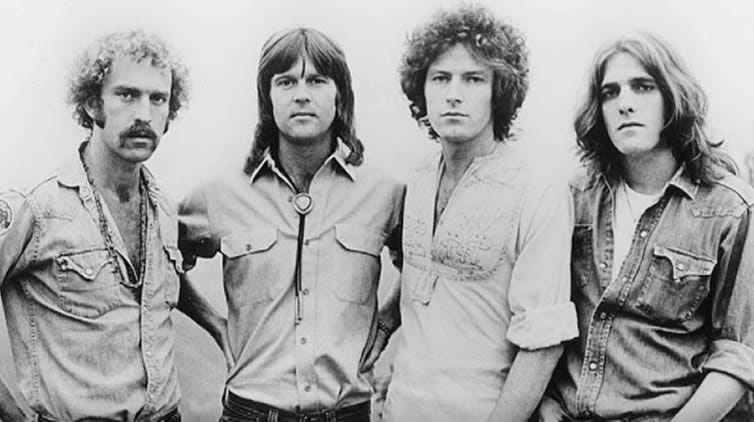
1972: American country-style rock band Eagles release their debut studio album, simply titled “Eagles.” It was recorded for Asylum Records at London’s Olympic Studios, and produced by Glyn Johns, famous for producing The Rolling Stones, The Kinks, The Who, and Bob Dylan among many others.
A work of country and folk influenced light rock, the LP spun-out three hit singles: “Take It Easy,” which reached No. 18 on the Billboard Hot 100; “Witchy Woman,” a song that went to No. 9 on the chart; and “Peaceful Easy Feeling,” peaking at No. 22.
Jackson Browne co-wrote the track “Take It Easy” and fully wrote “Nightingale.” Gene Clark co-wrote “Train Leaves Here This Morning,” and Jack Tempchin was the author of “Peaceful Easy Feeling.” The rest of the songwriting was divided fairly equally among the band members, with each musician also singing lead vocals on at least two songs.
Modestly-rated by most critics, the record was popular with audiences for its three hits, not its deep tracks, achieving Platinum certification in the U.S. and Gold in Canada. All three of those hits would appear on the band’s first greatest hits collection, along with hits from three other albums, and sell a certified 43.2 million copies.
Still Life
1982: The fourth contemporary live album from The Rolling Stones is released to monumental disappointment, at least from me. Titled “Still Life,” it was recorded during the November-December leg of the group’s 1981 American tour, with overdubs added in March-April of 1982.
The LP was preceded by the release of the single “Going to A Go-Go,” a cover of the 1965 song by The Miracles. It reached No. 1 in Canada on the CHUM Chart, but only No. 25 on the Billboard Hot 100 in the U.S.
Though the record was a commercial success by trading on The Rolling Stones brand, earning Platinum certification in the U.S. and Canada, and Gold in the U.K., Australia, and Japan, it was panned by critics for sounding too slick, eschewing the raw edges of a Stones live album. It seems those overdub sessions went a little too far.
Christgau’s Record Guide grades the album B-, while Rolling Stone gave it 3.5-Stars. From there, the ratings fall precipitously, earning 1-Star from AllMusic and MusicHound, and only 2-Stars (out of five) from The Rolling Stone Album Guide.
My issue with “Still Life” is that there’s only ten tracks, too few for a live package, and four of them are cover songs. In addition, the intro of “Take the A Train” and the outro of “The Star Spangled Banner” Hendrix-style are tacky additions.
The Monday Miles
1972: At Columbia 52nd Street Studios in New York, Miles Davis holds the first day of recording sessions for what would become the seminal jazz-funk album, “On the Corner.” Long-time associate Teo Macero is once again producing for Columbia Records.
Over the course of three days, several famous and talented musicians were recruited to record for the LP, including Jack DeJohnette (d), Bernie Maupin (bcl), Herbie Hancock (elp; or), Chick Corea (elp; synth), John McLaughlin (g), Don Alias (d; perc), and Jame Mtume (perc), among 13 other players.
This Day in Music will dig deeper into this iconic work on its release date, October 11th.
The Daily Elvis
1977: It is announced that Elvis and CBS-TV have made a deal for CBS to film him on his summer tour for a TV special to be aired at a later date. Filming began that same night at his concert in Macon, GA. Sadly, Elvis died only two months after signing the deal. Footage filmed at the Macon concert became the TV special Elvis in Concert, aired October 3, 1977.
I saw the Speaking in Tongues tour in Reunion Arena in Dallas. FANTASTIC show! 🤘😎🤘