This Day in Music
December 17th

Some drumset technical teachings, weathering the storm, and optioning Elvis, on this day in music.
People
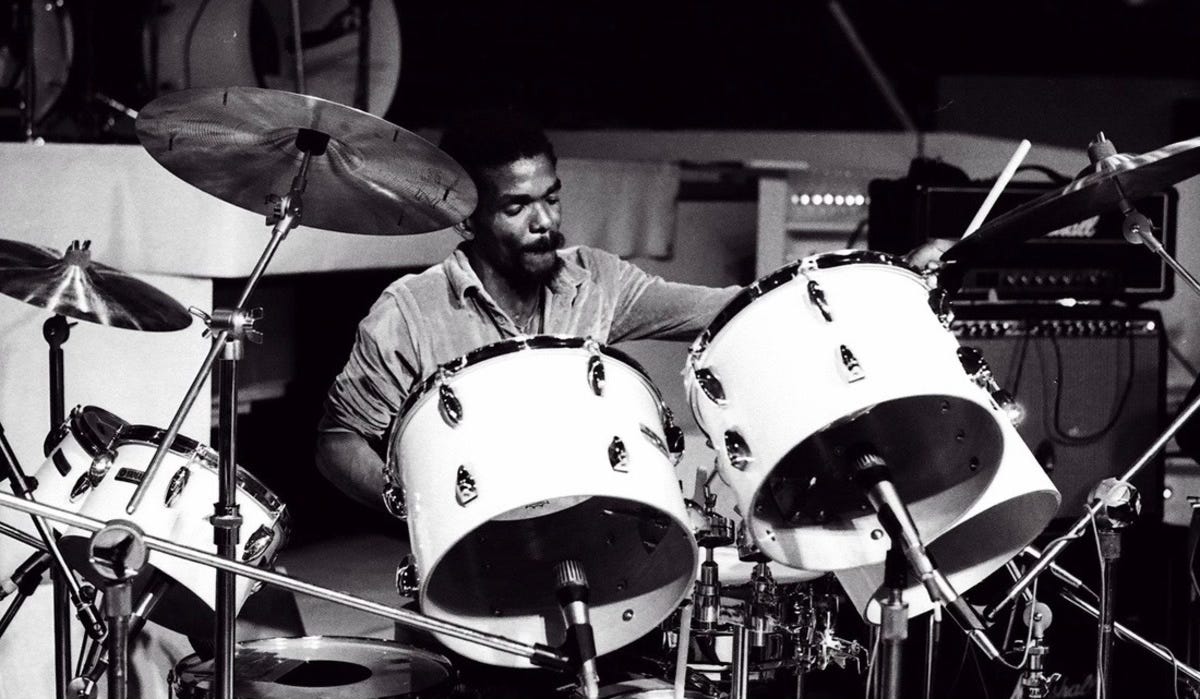
1950: Carlton “Carly” Barrett, the long-time drummer for Bob Marley and The Wailers, is born in Kingston, Jamaica.
Barrett is known for perfecting the “One-drop Rhythm” on drumset, wherein the snare is played with a cross-shot overtop the bass drum, both on the third beat of a 4/4 measure. Forming a backbeat by this method creates the expectation of the same notes on the 1 of the measure, but they are dropped and left unplayed, hence the “1-drop” name. Listen to this awesome live version of “Lively Up Yourself“ for an example.
As if becoming synonymous with a famous rhythm wasn’t enough, Barrett also caught the ears of drummers and music aficionados alike for his trademark syncopated broken triplet pattern on the hi-hat, and his laid back yet spunky introductions, as exemplified on songs like “Get Up, Stand Up,” “Positive Vibration,” and “Roots, Rock, Reggae,” which is also another example of the One-drop.
Carlton was tragically murdered in 1987, a plot orchestrated by his wife, who along with her co-conspirators went to prison. He was only 36 years old. Today would have been his 75th birthday.
Releases
1976: Prog-rock masters Genesis release their eighth studio album, “Wind & Wuthering.”
By mid-1976, Genesis had trekked through their own wind and wuthering, the departure of original front man Peter Gabriel, issuing the critically and commercially successful album, “A Trick of the Tale.” With drummer and backup vocalist Phil Collins now on lead vocals, the group embarked on a successful 1976 tour, adding King Crimson’s Bill Bruford as second drummer, allowing Collins to take to the front of the stage for most of his singing.
The one and only time Genesis released two original studio LP’s in the same year, the band took advantage of an abundance of new material and recorded the album in the early fall of 1976. It would be the last to include original guitarist, Steve Hackett, who left the band due to dissatisfaction with the amount of his original material being accepted by the other members.
“Wind & Wuthering” is a moody album that eschews many of the band’s previous themes of fantasy, folklore, and social commentary, and even includes two love songs, “Your Own Special Way,” the lead single from the album, and “Afterglow,” a lament to a lost relationship.
Critical reception was positive for this work of quiet elegance. Both Hackett and Tony Banks, along with a large group of fans, have called it one of their favourites by Genesis. The album reached No. 7 on the UK Albums list, No. 26 on the Billboard 200, and was certified Gold in both countries, and in Canada.
1971: One of the great albums of the Rock and Roll oeuvre, David Bowie’s fourth studio album, “Hunky Dory,” is released to uniform critical praise.
Typical for Bowie, this new album was a change in style for the artist, choosing a softer piano-based pop and art rock mood over the guitar-led edge of his previous record, “The Man Who Sold the World.” That doesn’t mean it was all quiet folk, as the excellent song “Queen Bitch” would exemplify. The tracks “Changes,” “Oh, You Pretty Things,” and “Life on Mars,” would become Bowie classics.
The album’s lyrics draw from cultural and literary references, and Bowie chose to include odes to three American icons: Bob Dylan, Andy Warhol, and Lou Reed.
Poor promotion delayed the commercial success of the album as label RCA was concerned that Bowie would again change his image. Of course Bowie would change his image, that was his nature, and the record-buying public would embrace those changes throughout his long career. RCA’s concern was misplaced. As Bowie sang in the album’s opening track, “Just gonna have to be a different man.”
“Hunky Dory” finally gathered sales momentum following the release of Bowie’s 1972 break-out work, “The Rise and Fall of Ziggy Stardust and The Spiders from Mars,” reaching No. 3 on the UK Albums list, earning Gold certification in several markets, and ultimately selling nearly four million copies.
The Daily Elvis
1963: In what would be one of the easiest decisions ever made by a record label, RCA Victor exercises its option to extend Elvis’s contract for an additional two years.
Pictured: Carly Barrett and his Yamaha Recording Custom drum set, resonant heads removed for that dry, funky punch.