This Day in Music
January 23rd

A monarch, an alien, and Elvis walk into a studio… on this day in music.
Releases
1976: Eclectic British artist David Bowie releases his tenth studio album, “Station to Station.” The cold electronica of the work indicated yet another drastic change for Bowie following his previous album, the warm-hearted, American soul-themed, “Young Americans.”
Though he’s often made songs of five to seven minutes in length, the title track, “Station to Station,” is a rare venture into epic-length songs at just over 10 minutes, something he would not repeat until the title track of his final album, “Blackstar” in 2016. The song introduces his new persona, The Thin White Duke, as a dark, sinister figure described as a “mad aristocrat,” “amoral zombie,” and “an emotionless Aryan superman.” The lyrics of the song “Station to Station” confirm this: “The return of The Thin White Duke / Throwing darts in lovers’ eyes.” The song itself compliments the persona of the Duke by creating a cold and eerie mood.
The influence on Bowie by the electronica and “krautrock” sounds of German groups such as Neu! and Kraftverk became apparent on this album, and would be further explored through his “Berlin Trilogy” in the years that followed. The new sounds had reviewers somewhat baffled, describing the album variously as “synthesized funk-rock,” “electronic R&B hybrid,” “eerie avant-pop,” and “ice-funk,” but it’s just great music. Despite their unnecessary confusion, critics loved the record, with most major publications assigning it their highest ratings, indicating universal acclaim. Christgau’s Record Guide grades it an A, while The Rolling Stone Album Guide assigns it 5-Stars.
That feeling of the cold vacuum of space created by the album is punctuated by its cover, which features a still image of Bowie from the movie, “The Man Who Fell to Earth,” which sees him playing the central character, an alien named Thomas Jerome Newton, who has arrived on earth to seek water for his own planet, but succumbs to human vices and corruption.
On the strength of two of Bowie’s most famous hit singles, “Golden Years” and “TVC15,” “Station to Station” was a widespread commercial success. It reached No. 3 on the Billboard 200, No. 2 on the Canada Albums chart, No. 5 on the UK Albums list, and was Top-10 in six other countries. It was certified Gold in Canada, the UK, and the US.
1973: English keyboard player and prog-rock master Rick Wakeman releases his second of 100 (yes, 100) solo albums to date, “The Six Wives of Henry VIII.” An instrumental progressive-rock concept album, each of its six tracks is a musical portrait of King Henry’s six wives.
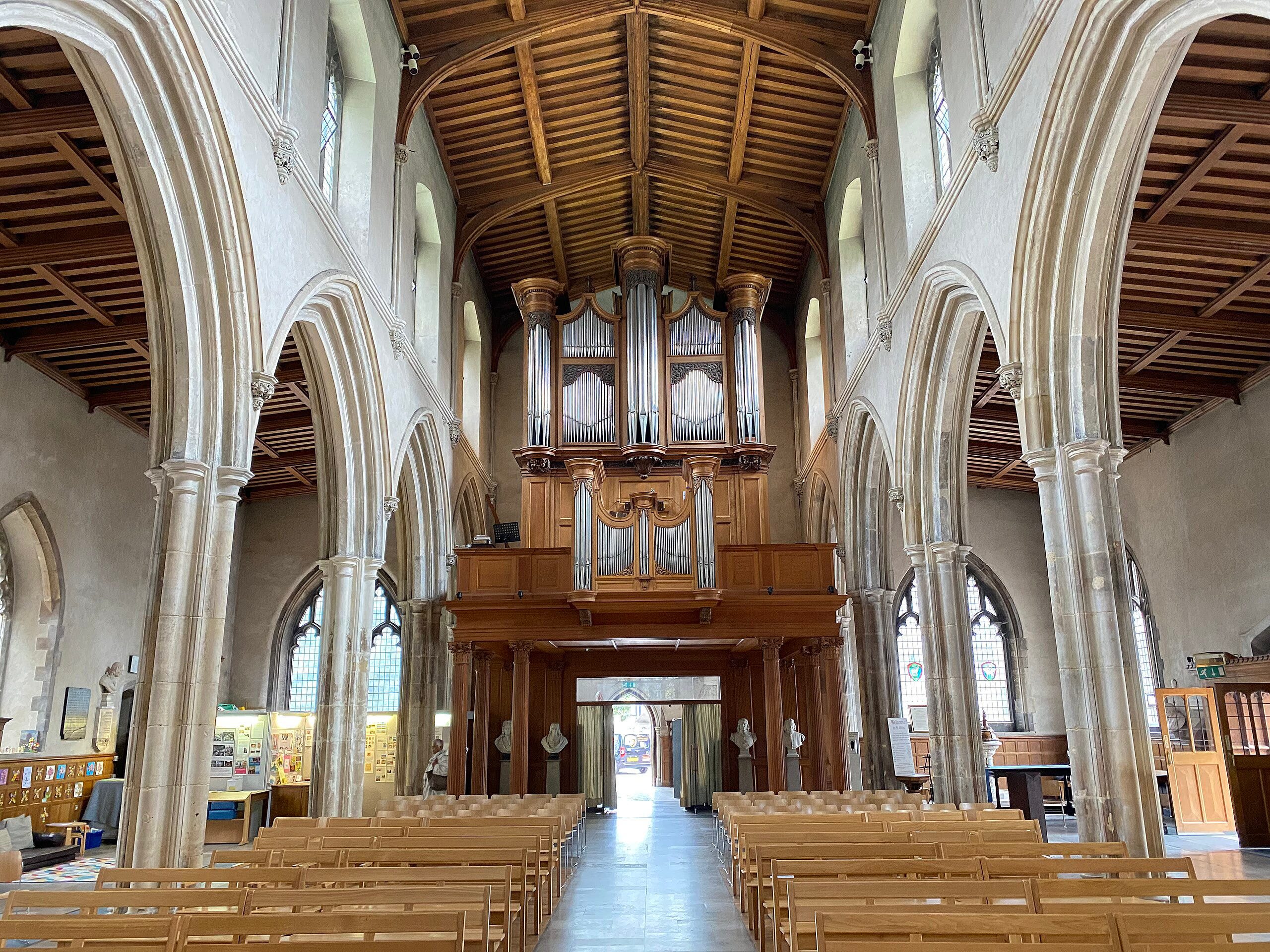
Wakeman played a variety of keyboards on the record, including mini-Moog synthesizers, Mellotrons, a custom-built Hammond B3 organ, and the pipe organ at St. Giles-without-Cripplegate Church in the City of London, featured on the track “Jane Seymour.”
One single was spun-out from the album, “Catherine Parr,” with “Ann Boleyn” on the B-Side, but it did not chart. The LP itself reached No. 30 on the Billboard 200 and was certified Gold in the US and Australia. Reviews of the album were mixed, but it’s a good record that appeals to a very specific audience.
In addition to Wakeman’s solo albums, he made two albums with The Strawbs, eight albums with Yes, four with Dave Cousins, one with Anderson, Bruford, Wakeman, and Howe, five with his sons Adam and Oliver Wakeman, one with Anderson-Wakeman, along with multiple live albums with each of those acts. In addition, he has made 86 albums with collaborators or as a sideman, including several with David Bowie. All told, Wakeman appears on over 200 albums!
The Friday Frank
1978: Final rehearsals and preparations are made by Frank Zappa for his four consecutive shows beginning January 24, 1978 at London’s Hammersmith Odeon (now Eventim Apollo), the historic art-deco auditorium in the borough of Hammersmith and Fulham. These concerts provided the basic tracks for many of the songs on FZ’s 1979 album, “Sheik Yerbouti.”
The Daily Elvis
1969: Continuing his second rise to fame, which began with his '68 Comeback Special the year before, at 4am in the morning, Elvis Presley enters American Sound Studios in Memphis to record what would become his 18th and final No. 1 song on the Billboard Hot 100, the Mark James-penned, "Suspicious Minds." Featuring a great performance from future Grateful Dead vocalist, Donna Jean Godchaux on backing vocals, it would be certified Platinum and become one of Elvis's best and most-famous songs.
Pictured: The organ at St. Giles-without-Cripplegate in the City of London, on which Rick Wakeman recorded the song Jane Seymour.