This Day in Music
Keeping the stories short yet numerous, and Elvis records his last great hit, on this day in music.

From Genesis to Revelation
1969: “From Genesis to Revelation,” the somewhat unknown debut album by prog-rock masters Genesis is released to critical apathy.
The record was a collection of short, catchy psychedelic pop songs, none of which charted, leading it to commercial failure. The lack of success convinced the band to resume their studies. They would re-launch in late-1970 as a fully-constituted prog band with the excellent album “Trespass.”
Houses of the Holy
1973: English heavy-blues rockers Led Zeppelin release their fifth studio album, “Houses of the Holy.” Mostly recorded using the Rolling Stones Mobile studio at Stargroves, an English manor house owned by Mick Jagger, and at Headley Grange, where the band had recorded previously, it received mixed reviews upon release, but was a huge commercial success.
The LP went to No. 1 in the U.S., U.K., and Canada. It was certified 11x Platinum in the U.S., and Platinum in the U.K., selling an estimated 17.7 million units worldwide. That’s no surprise. The album is great despite some of the reviews.
Don’t look for the song “Houses of the Holy” on this record, however. It doesn’t appear until “Physical Graffiti” in 1975.
Tequila
1958: One of the great songs of the Rock and Roll oeuvre, “Tequila,” by The Champs, reaches No. 1 on The Billboard Hot 100 and the Billboard R&B chart. Originally a back-up band for Challenge Records recording artist Dave Burgess (who?), they introduced the song to his producers who loved it. It was recorded under the name The Champs and issued as the B-Side to Burgess's “Train to Nowhere,” single. A DJ in Cleveland played that B-Side and “Tequila” became the default A-Side. By the end of March, it was No. 1.
The Man from Utopia
1983: American musical genius Frank Zappa releases his 36th album, “The Man from Utopia.” The title is taken from a 1950's song of the same name that Zappa covers as part of his own song, “The Man from Utopia Meets Mary Lou.”
A combination of live performances and studio overdubs, the album cover features a wild illustration of a muscular Zappa swatting mosquitoes while trying to play guitar, a reference to an actual occurrence during a concert in Italy on July 7, 1982, when the band was beset from all sides by the tiny vampires.
Zappa's infamous disdain for drug use is exemplified on the opening track, “Cocaine Decisions.” It's the first of two albums to credit Steve Vai with “impossible guitar parts.”
Baby Snakes
1983: “Baby Snakes,” the 37th album from avant-garde American rocker and artistic genius Frank Zappa is released as the soundtrack to the film of the same name, described by FZ as “a movie about people who do stuff that is not normal.” As is obvious from the paragraph above, this is the second release from Zappa on the same day, March 28, 1983.
Put together from footage of his 1977 Halloween concert at The Palladium in New York, all performances are live and unique to the album with the exception of “Baby Snakes,” which is the same studio recording as appears on the LP “Sheik Yerbouti,” but with the opening riff edited out.
The initial release of the album was available only to Columbia Records record club members by mail order, but was later offered to distributors for sale in retail stores.
The highlight of the album is the track “Punky's Whips,” a different though not quite as good live version than what appears on the album “Zappa in New York” because of the absence of the horn section and the opening narration performed by legendary NBC announcer Don Pardo. It’s an excellent arrangement nonetheless, with keyboards and vocals making up for the loss of brass.
The Division Bell
1994: Legendary psychedelic progressive rockers Pink Floyd release their 14th and penultimate studio album, “The Division Bell.” Richard Wright is once again a full member of the band following his departure before “The Final Cut,” though he was a full member for “A Momentary Lapse of Reason” in all but official credit, and co-writes most of the songs with David Gilmour.
Reviews were mixed, but the record was a huge commercial success, going to No. 1 in no less than 21 countries, including the U.S., Canada, the U.K., E.U., and Australasia. It sold over seven million copies worldwide and was certified multi-Platinum in the U.S., U.K., Canada, Switzerland, and Germany.
The album's thematic constant is communication, and it takes its name from the British parliament's division bells, which are rung whenever a vote is to be taken.
The Daily Elvis
1972: At RCA Studio B in Hollywood, Elvis records the song “Burning Love.” It was the last major hit record for The King, making the Top-10 on several charts and going all the way to No. 1 on the U.S. Cashbox Top 100.
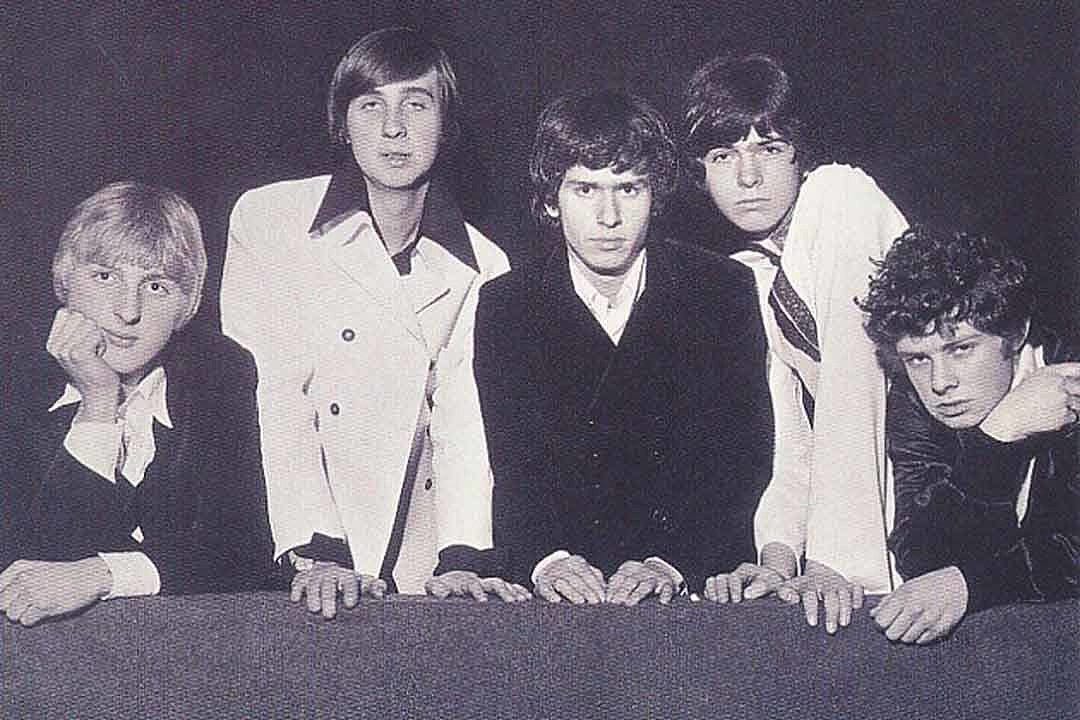
Pictured: The young lads of Genesis c.1968. From L to R: Anthony Philips (g), Mike Rutherford (g; bg), Anthony Banks (key), Peter Gabriel (v; fl; per), and the second of Genesis’ nine drummers, John Silver.
Post-credits Scene
Genesis had nine drummers? Yes! That’s almost as many as Spinal Tap, though not all of them were official members of the band, and none spontaneously combusted on stage.
Chris Stewart was the first drummer, and a co-founder of the band. He departed before the first album, “From Genesis to Revelation,” on which John Silver played drums. For the band’s second album, “Trespass,” John Mayhew was the drummer, the third man to hold that position. Phil Collins then took over as Drummer No. 4 for every studio album beginning with “Nursery Cryme” in 1971, and ending with “We Can’t Dance” in 1991, plus the 1977 EP, “Spot the Pigeon.”
Collins also played drums on every official live album in the Genesis catalogue. After taking over lead vocals and frontman duties, he was bolstered by a second drummer when performing live, first by Bill Bruford, who appears briefly on the album “Seconds Out” for the track “The Cinema Show,” and then by Drummer No. 6, Chester Thompson, who also appears on “Seconds Out,” plus all other official Genesis live albums.
On the band’s final studio album, “Calling All Stations,” Nick D’Virgilio performs most of the recordings as the seventh drummer, and Nir Zidkyahu plays one track on drums and the other tracks on percussion, as Drummer No. 8.
Finally, on the band’s “The Last Domino?” tour, Nic Collins played drums due to Phil Collins’s ailing health. Nic was Drummer No. 9, and is Phil’s son.