This Day in Music
December 14th

Were they induced into the hoax by an agent provocateur? Or was it a case of all or nothing when time ran out as they were called back to London? And if so, so what? It’s all explained on this day in music.
Releases
1988: German R&B duo Milli Vanilli release their debut studio album, “All or Nothing.” An immediate international success, it reached the Top-10 in several countries, and the North American version, “Girl You Know It’s True,” went to No. 1 in Canada, earning Diamond certification, and No. 1 in the US, where it was certified 6x Platinum.
Unfortunately, it was all a hoax. Sort of. The music is real, and for some reason audiences around the world loved it. However, Milli Vanilli frontmen, Rob Pilatus and Fab Morvan, never actually sang on the record or at live appearances. When the truth came out it was an international scandal. Rob and Fab were subsequently credited as “visual performers.” The actual singers were John Davis and Brad Howell.
1984: With the release of their fifth studio album, “Agent Provocateur,” British-American rock band Foreigner achieves enormous commercial success.
The album was Top-10 in twelve countries, and No. 1 in five of those countries - Germany, Norway, Sweden, Switzerland, and the UK. It was certified 3x Platinum in the US, Platinum in Germany, Switzerland, and the UK, and Gold in France and New Zealand.
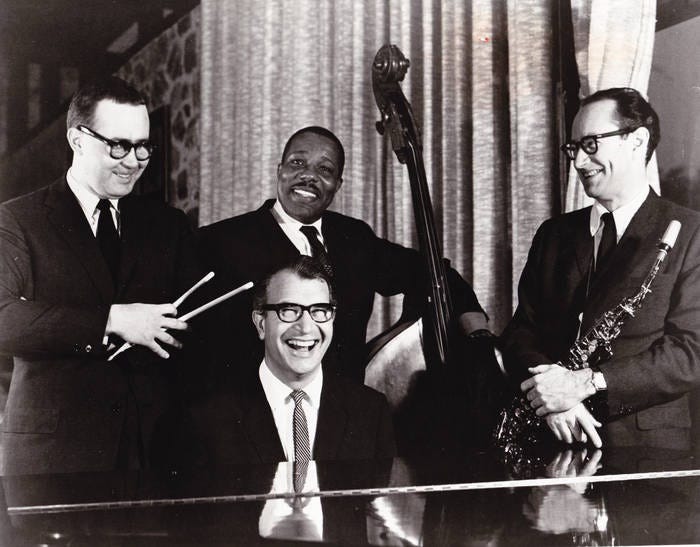
1959: American jazz legend Dave Brubeck releases one of the coolest records in history, his 29th album, “Time Out,” credited as The Dave Brubeck Quartet, a group he put together in 1951.
All of the record’s songs are part of the central theme of time signatures. Brubeck had been on tour in Eurasia and while in Türkiye, he came upon a group of street musicians playing a traditional folk song. Brubeck noticed that the time signature was 9/8, subdivided as 2/2/2/3, which was an uncommon meter in Western music. Brubeck knew the theme of his next project at that moment.
Columbia Records president Goddard Lieberson, however, was not as excited by the idea as Brubeck, but he agreed to finance and release the record if the Quartet first recorded a conventional jazz LP consisting of songs from the American South, titled “Gone With the Wind.” That record was rebuked by critics and failed commercially, whereas “Time Out” became one of the most successful jazz records of all time.
The songs and time signatures on the album are:
Blue Rondo à la Turk - 9/8 with 4/4 sections
Strange Meadowlark - free form, then 4/4
Take Five - 5/4
Three to Get Ready - alternates between 3/4 and 4/4
Kathy’s Waltz - begins in 4/4 and transitions into 6/8
Everybody’s Jumpin’ - 6/4
Pick Up Sticks - 6/4
The track “Take Five” was released as a single and was not well-known at first, but by 1961 it had become a sleeper hit. The song was composed by alto saxophonist Paul Desmond on a challenge from drummer Joe Morello. Propelled by the popularity of the single, the album itself did good business, peaking at No. 2 on the Billboard Pop Albums chart in 1961, and earning 2x Platinum certification for two million in confirmed sales, an unprecedented accomplishment for a jazz record.
The Dave Brubeck Quartet would follow-up in the album with a sequel, “Time Further Out,” released in November of 1961. It features the popular track, “Unsquare Dance,” which is in 7/8 time (think: one-two, one-two, one-two-three; one-two, one-two, one-two-three), and the great “Far More Drums,” which allowed Joe Morello to once again solo in 5/4 time as he did on “Take Five.” It reached No. 8 on the Billboard 200 album chart.
1979: “London Calling,” the post-punk double-album masterpiece by English punk-rock pioneers The Clash, is released. The album cover is modelled after Elvis’s 1956 debut, with “London” printed vertically in pink on the left side, and “Calling” printed in green along the bottom, over a black and white photo of the performer, which in The Clash’s case is Paul Simonon smashing his bass into the stage floor.
All 19 tracks on the album are solid gold, but the standouts include “London Calling,” “Rudie Can’t Fail,” “Spanish Bombs,” “Lost in the Supermarket,” “The Guns of Brixton,” “Clampdown,” “Wrong ‘Em Boyo,” “Death or Glory,” “Revolution Rock,” and “Train in Vain,” which was not listed on the album sleeve or label in early pressings.
With influences from reggae, ska, jazz, R&B, and hard rock, the recored was met with near-universal acclaim from critics, earning an A+ from Christgau’s Record Guide, 5 Stars from The Rolling Stone Album Guide, and 4/4 Stars from both the Chicago Sun Times and The Los Angeles Times. In 1989, Rolling Stone ranked “London Calling” the best album of the 1980’s, and it sits at No. 16 on Rolling Stone’s 500 Greatest Albums of All Time, 2020 Edition.
Audiences were equally impressed, sending the album to Silver certification in the UK, Gold in France and Canada, and Platinum in Italy, the UK, and America. It’s estimated that the LP has sold over five million copies since its release.
1974: Joe Walsh releases his third studio solo album, “So What.” Though the record doesn’t include any of Walsh’s best-known hits, it’s a likeable album that performed well amongst his fans, earning Gold certification for 500,000 units shipped.
Eagles members Don Henley, Glenn Frey, Randy Meisner, and J.D. Souther all appear on the album on background vocals, foreshadowing 1976 when Joe Walsh would join the band as a permanent replacement for founding member Bernie Leadon, who had decided to depart the group.
The Daily Elvis
1956: The movie Love Me Tender, starring Elvis, has its UK premiere in London.
Pictured: The Dave Brubeck Quartet in 1959. From L to R: Joe Morello (d), Eugene Wright (b), Dave Brubeck (p), and Paul Desmond (as).