This Day in Music - Feb. 29th
Though 2026 is not a leap year, it's still important to note February 29th album releases, and we can't forget Elvis, on this day in music.

Releases
1980: American rockers Journey release their sixth studio album, “Departure.” With an edgier sound credited to recording the album “live from the floor” of the studio, it became Journey’s highest-charting album by that date, reaching No. 8 on the Billboard 200.
Of its three singles, “Anyway You Want It” became the LP’s biggest hit, peaking at No. 23 on the Billboard Hot 100 and certified 4x Platinum. The band would really hit the big time the year following, with the release of 1981’s “Escape.”
1988: Robert Plant releases his fourth solo studio album, “Now and Zen.” Plant returned to what he knew best for this album, blues-influenced rock and roll and Jimmy Page, who plays the guitar solos on two of the singles, “Heaven Knows” and “Tall Cool One.”
Critics adored the album, with most ranking it just under their highest ratings. Fans also embraced the record, sending it to No. 6 on the Billboard 200 and No. 4 on the Canada RPM Albums Chart. The single, “Tall Cool One,” hit No. 1 on the Billboard Mainstream Rock Chart.
February Releases of Unknown Dates
These albums were released in February throughout history, but the exact date is unconfirmed.
1968: Fleetwood Mac releases its first studio album, the eponymously-titled “Fleetwood Mac.” A collection of blues originals and covers, it featured ex-Bluesbreakers members Peter Green, Mick Fleetwood, and John McVie. It’s the only Fleetwood Mac record not to feature Christine McVie.
1984: The Alan Parsons Project releases their seventh studio album, “Ammonia Avenue.” It includes the hit song, “Don’t Answer Me,” which reached No. 4 in the U.S. and No. 1 in Canada on the adult contemporary charts.
1969: MC5 releases its first album, “Kick Out the Jams.” The LP is a rare example of a debut record also being a live record. The album and band would become highly-influential on future American punk bands.
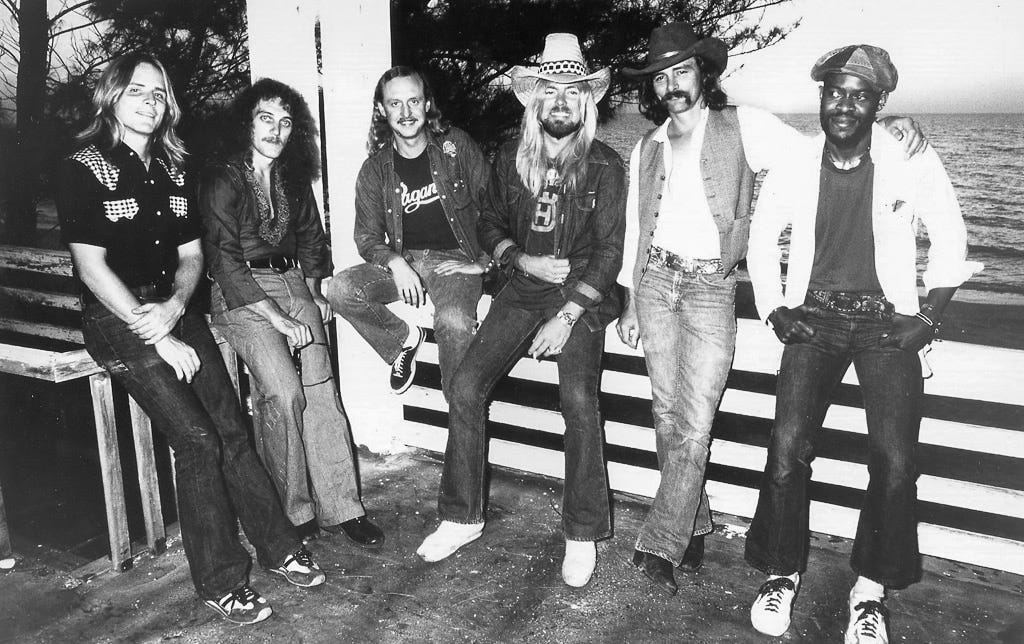
1979: The Allman Brothers Band issue their eighth album, the studio project “Enlightened Rogues.” Released during a difficult period for the band, it was dismissed by critics but accepted by fans, and includes the standout track, “Pegasus,” by Dickie Betts.
1978: Blondie releases their second studio album, “Plastic Letters.” Though the collection of short post-punk tunes would only reach No. 72 on the Billboard 200, they would achieve worldwide fame later that year with the release of their third album, “Parallel Lines.”
1981: Robert Fripp releases “The League of Gentlemen,” a solo album featuring the group he formed and toured Europe and North America with in 1980, named The League of Gentlemen. The run-out groove of Side 1 includes the message, “The next step is discipline.” He had formed a new band named Discipline, which he soon realized was actually the new era of King Crimson.
1971: Soft Machine releases its fourth studio album, “Fourth.” The spectacular album completed Soft Machine’s transition from a psychedelic and jazz-influenced pop-prog band to a fully instrumental jazz ensemble. It would be the last album with founding drummer Robert Wyatt, who had already released his first solo record, “The End of an Ear,” and had formed the new Canterbury-prog band, Matching Mole.
The Daily Elvis
1960: While serving in the Army, Elvis was interviewed by British journalist and historian, Peter Hopkirk in Germany.
Pictured: The Allman Brothers Band in 1979, from L to R: David Goldflies (b), “Dangerous” Dan Toler (g; slide), Butch Trucks (d), Gregg Allman (org; v), Dickie Betts (g), John Lee Johnson aka Jaimo (d).