This Day in Music
Michael Fitzgibbon
Rock goes to the opera, David Copperfield becomes rock, radio is rocked by a scandal, and Elvis is doing PR, on this day in music.
Tommy
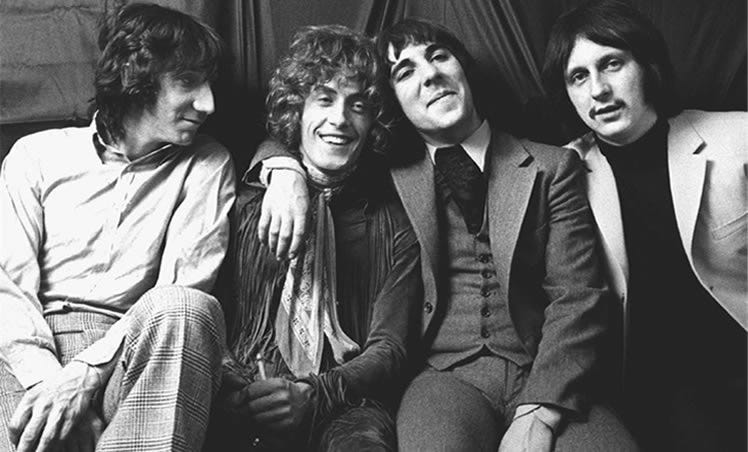
1969: Legendary English rock band The Who release their fourth studio album, “Tommy,” a double-LP concept album billed as a rock opera.
It follows the story of Tommy Walker, a boy who after suffering the trauma of witnessing his father murder his mother's lover, then gaslighted by the pair into believing it never happened, becomes deaf, dumb, and blind to the outside world, now relying primarily on his sense of touch.
Tommy’s ability to feel vibrations make him an expert pinball player and with psychiatric help, he eventually recovers his senses, which were lost psychosomatically. He forms a religious cult of sorts, but when his adherents reject him, he once again retreats into his loss of senses.
Critics were split upon its release, with some rightly considering it a masterpiece and others deriding it as pretentious. It ultimately won critics over, and performed even better with audiences.
A commercial success, the album has sold over 20 million copies and peaked at No. 4 on the Billboard 200, No. 2 in the U.K., and No. 6 in Canada. Many fans of The Who name it their favourite work from the group.
All tracks from the album advance the narrative, and are all excellent and should be listened to in sequence, but the most popular songs outside the context of the story are “Pinball Wizard,” “I'm Free,” “Christmas,” and “We're Not Gonna Take It,” from which the sections “See Me, Feel Me / Listening to You” were excerpted into a separate single.
I adore “Tommy,” but I like the band’s second rock opera from 1973, “Quadrophenia,” just a little bit more. Pete Townshend attempted to write a third rock opera, titled “Lifehouse,” that would have been second in chronological sequence, but his concept was so abstract that he could never properly articulate it into a cohesive story. Instead, the existing songs were released as the legendary album, “Who’s Next,” in 1971.
Demons and Wizards
1972: “Demons and Wizards,” the fourth studio album from English heavy rock band Uriah Heep is released to high critical praise.
The first from the band's classic lineup following the addition of Gary Thain on bass and Lee Kerslake on drums, highlight tracks include “The Wizard,” “Easy Livin',” which is also their most popular single, “Circle of Hands,” and “Paradise.”
The best song from the “Demons” recording sessions, the extended 10-minute version of “Why,” was not included on the original album, but has been included on digital re-releases.
Honky Château
1972: I've mentioned the famous recording studio, Château d'Hérouville, located in the French village of Hérouville about 70 kms northwest of Paris, many times in this blog. The famous nickname for the studio, coined by Elton John, is also the name of his fifth studio album, “Honky Château,” released on this day.
Highly-praised by critics, the record all the way to No. 1 in the U.S., the first of seven consecutive Elton John albums to do so, No. 2 in the U.K., and No. 3 in Canada. It features the famous songs “Honky Cat,” “Rocket Man (I Think It's Going to Be a Long, Long Time),” and “Mona Lisas and Mad Hatters.”
The record ranks No. 251 on Rolling Stone's 500 Greatest Albums of All Time (c) 2020, and is considered by some fans to be his best, though I still contend that “Goodbye Yellow Brick Road” is the pinnacle of EJ records.
So
1986: Legendary English singer-songwriter and musician Peter Gabriel releases his fifth studio solo album, “So.”
After titling each of his first four studio albums simply “Peter Gabriel,” “So” became the first album to establish a new naming pattern of two-letter words for his next five Rock and Roll studio works: “So,” “Us,” “Up,” “I/O,” and “O\I.” His two specialty albums, “Scratch My Back” and “New Blood,” and his film music, are thematically titled.
Back to “So,” it was a huge commercial success, going to No. 1 in the U.K., Canada, Austria, Netherlands, Finland, New Zealand, and Norway, and No. 2 in the U.S. It has sold over seven million copies for 5x Platinum certification in the U.S. and 3x Platinum in the U.K.
The lead single, “Sledgehammer,” was a worldwide mega-hit, reaching No. 1 in several regions, with its video also topping charts and year-end awards. Other great tracks from the record include “Red Rain,” the great duet with Kate Bush, “Don't Give Up,” “That Voice Again,” the amazing “In Your Eyes,” “Mercy Street,” “Big Time,” “We Do What We're Told (Milgram's 37),” and beginning with vinyl pressings in 2002, “This Is the Picture (Excellent Birds),” co-written and co-performed with Laurie Anderson, which had previously been included on CD releases only.
For those who don't know, I've listed every track on the record! It's among my favourites from Peter Gabriel, though not my very favourite, which would be “Us.”
Peter Dennis Branford Townshend
1945: Peter Dennis Branford Townshend, or Pete Townshend for short, is born in Chiswick, England. He is of course legendary as co-founder, co-frontman, and principal songwriter of The Who. With the group, he has made 12 studio albums, and as a solo artist, he has made seven albums.
Known primarily as a guitarist with a distinctive “windmill” flare, Townshend is in fact a multi-instrumentalist, playing piano and keyboards, other stringed instruments, wind instruments, violin, and drums. My personal favourites of his solo records are “Empty Glass,” “White City: A Novel,” and “All the Best Cowboys Have Chinese Eyes.”
Happy 81st Birthday, Pete!
A Scandal in Clevelandia
1960: The growing “payola” scandal, the revelation that music labels and promoters had been paying DJ's to prioritize their artists' records, breaks into a big story when nationally-famous DJ Alan Freed is indicted on commercial bribery charges along with seven other people for accepting over $30,000 in payments.
Following two years of legal process, he pled guilty in a deal with prosecutors and was subjected to a suspended sentence and a $300 fine. The lenient sentence was because “payola” wasn't actually illegal, it was just sleazy, and Freed therefore broke no laws.
The payola laws beginning in 1960 don’t make the payments illegal, provided said payments are disclosed to the audience.
The Daily Elvis
1957: Elvis participates in a Col. Tom Parker-arranged PR event wherein an elaborate dog house was built for the RCA Records mascot, Nipper, as a gift to Steve Sholes, the RCA executive who signed Elvis to the label.
I always loved “Boris the Spider”🎶🙌🏾👁️🗨️🕸️🕷️I recall our elementary music teacher sharing the WHO, JC Superstar/ A.L. Webber’s. the Gospell / / Hair crowds. I personally was fascinated by the poster with the can of Beans - then to see AnnMargaret wallowing in Beans in the film - Tina Turner as the Acid Queen also a ❤️ Thank you!, we went to Tanglewood to see Pete Townsend or so we thought… someone else with very operatic background performed… mu spouse wanted to leave to go watch football (blah) I was reading Bruce Springsteen and was whisper / talking about that book with someone nearby and I got Shusshed!,,