This Day in Music
There's something about March that motivates album releases, including Elvis, on this second consecutive busy day in music.

Releases
1993: Legendary American composer Frank Zappa releases his 61st album, a live release by The Mothers of Invention, titled “Ahead of Their Time.”
Produced by Zappa from a recording made of the MOI's October 25, 1968 performance at Royal Festival Hall in London, it features a musical play retroactively titled “Progress?,” much of which is lost on the listener due to the visual aspect of the piece, though Zappa did include extensive liner notes to aid in listening.
The rest of the concert reflected a typical MOI setlist from late-1968 including the classics “King Kong,” “Transylvania Boogie,” “Pound for a Brown,” and possibly the best version of “The Orange County Lumber Truck (Part II).”
The performance of “Progress?,” which is a ten-track suite, featured members of the BBC Symphony Orchestra. FZ described the performance as “…a fair, not outstanding, 1968 Mothers of Invention rock concert performance,” but it’s actually quite outstanding.
The lineup of The Mothers of Invention for the show was one of the larger ensembles under that name, comprising Frank Zappa (g; vox), Ian Underwood (as; p), Bunk Gardner (ts; cl), Motorhead Sherwood (ts; perc), Don Preston (elp; noises), Roy Estrada (bg; vox), Jimmy Carl Black (d; vox), and Arthur Dyer Tripp III (d; perc).
1973: “For Your Pleasure,” the second studio album by semi-glam, semi-prog, but all cool English band Roxy Music is released.
Great writing by Brian Ferry and more time in the studio allowed for increasingly sophisticated production treatments, producing a work of outstanding quality. These treatments are exemplified in the fade-out then fade-in of the final song on Side A, “In Every Dream Home a Heartache,” which includes all the instrument tracks subjected to phasing; and the title track, “For Your Pleasure,” fades out in an elaborate blend of tape-loop effects created by Brian Eno that includes Dame Judi Dench saying, “You don't ask; you don't ask why.”
It was the last album to feature Eno as he embarked on his solo career following its release. The only single from the album was the song “Do the Strand,” an upbeat and wonderful tune Ferry wrote in the Cole Porter tradition, performed in the archetypical Roxy Music style.
The album cover is as famous as the album itself, featuring French model and Salvador Dali confidant Amanda Lear, who was Ferry's girlfriend at the time, wearing a skin-tight patent leather dress while walking a black panther on a lead.
The record was highly-rated by critics, peaking at No. 4 on the U.K. Albums Chart, and is among the best output by Roxy Music.
1973: Prog-rock masters King Crimson release their fifth studio album, “Larks' Tongues in Aspic.” It's the first recording by Crimson's “KC III” lineup of Robert Fripp (g), John Wetton (bg), Bill Bruford (d), David Cross (v), and Jamie Muir (perc & d).
Mel Collins (ts; fl) was invited to remain with the band from its previous roster, but decided against it. He would rejoin King Crimson for its “KC VIII” lineup in 2013 and remain until Fripp once again put the band on hiatus in 2021. Bill Bruford moving from Yes to King Crimson was big news at the time, a decision he made based on his belief that he had done all he could with Yes and wanted more experimentation and improvisation.
According to Fripp, the band drew on influences from the Eastern European classical music of Béla Bartók and Igor Stravinsky, as well as European free improvisation, to co-write the album.
One of the classic albums of the prog movement, it is rated at near-perfect marks from all the usual music publications, including AllMusic, Rolling Stone, and All About Jazz, except of course by Robert Christgau of the Village Voice, who graded it B-.
Featuring some of the band's most legendary works, such as Parts I and II of the title track, “Larks' Tongues in Aspic,” “Easy Money,” and “The Talking Drum,” it is ranked No. 20 on Rolling Stone's 50 Greatest Prog Rock Albums of All Time (c) 2015. Not an album that appeals to the masses, it peaked at No. 61 on the Billboard 200 and No. 56 in Canada, but rose to No. 8 in prog-loving Italy.
2004: Legendary American blues-rockers The Allman Brothers Band release their 18th and final album, “One Way Out.” A contemporary live album recorded on the nights of March 25th and 26th of 2003 at The Beacon Theatre in New York, it is the first live LP to feature band members Derek Trucks (g) and Warren Haynes (g) together. The first studio album with the two guitarists being 2003's “Hittin' the Note.”
Highly-rated by critics, with Robert Christgau of the Village Voice remarking it was the “...best live album of their career because both age and youth suit them...” in his A- grading, the LP is a collection of 18 tracks that includes epic length versions of ABB classics. “Desdemona” clocks in at 13:27, “Instrumental Illness” is 16:42 long (including a 5:36 drum solo), “Dreams” is 12:49, and of course “Whipping Post” rocks on for 15:31, actually one of the shorter live versions of the song.
All of the tracks feature extended, improvised guitar solos by both Warren and Derek, each of them at times playing slide. “Instrumental Illness” was nominated for a Grammy for Best Rock Instrumental Performance at the 47th awards, but lost to Brian Wilson's “Mrs. O'Leary's Cow.”
Even More Releases on This Date
1979: “Evolution” by Journey, featuring the classic track, “Lovin’ Touchin’ Squeezin’,” is released. It would be certified 3x Platinum in the U.S. and Gold in Canada.
1993: Ireland’s Hothouse Flowers releases “Songs from the Rain,” which includes their great track, “Thing of Beauty,” among other wonderful songs.
1979: “Van Halen II” by Van Halen is released. It peaks at No. 6 on the Billboard 200 and features the singles “Dance the Night Away,” “Beautiful Girls,” and “Somebody Get Me a Doctor.” It did not impress critics as much as their debut the year before.
1983: Texas blues-rockers ZZ Top release their biggest album ever (though not their best), “Eliminator.” Full of big hits, the most famous tracks are “Legs,” which also had a hit video on MTV, “Sharp Dressed Man,” “Got Me Under Pressure,” and “Gimme All Your Lovin’.” It is certified Diamond in the U.S., Diamond in Canada, 4x Platinum in the U.K., and 4x Platinum in Australia. It peaked at No. 9 on the Billboard 200 and at No. 2 in Canada. In Finland, it went all the way to No. 1.
The Monday Miles
2018: Columbia/Legacy records releases “Miles Davis and John Coltrane - The Final Tour, The Bootleg Series, Vol. 6.” It is a collection of numbers from the Jazz at the Philharmonic European tour in March of 1960, featuring performances from the Olympia Theatre in Paris, the Konserthuset in Stockholm, and Tivoli Gardens Concert Hall in Copenhagen.
It would bet the last tour featuring John Coltrane, who left Miles’s quintet to focus exclusively on his own records as bandleader. Famous tracks include “All of You,” “On Green Dolphin Street,” “Walkin’,” “Bye Bye Blackbird,” “Round Midnight,” “Fran-Dance,” and “So What.”
The lineup of musicians was of course spectacular, including Davis (t) and Coltrane (ts), along with Wynton Kelly (p), Paul Chambers (b), and Jimmy Cobb (d). Though not officially one of Miles’s Great Quintets, it was nonetheless a great quintet.
The Daily Elvis
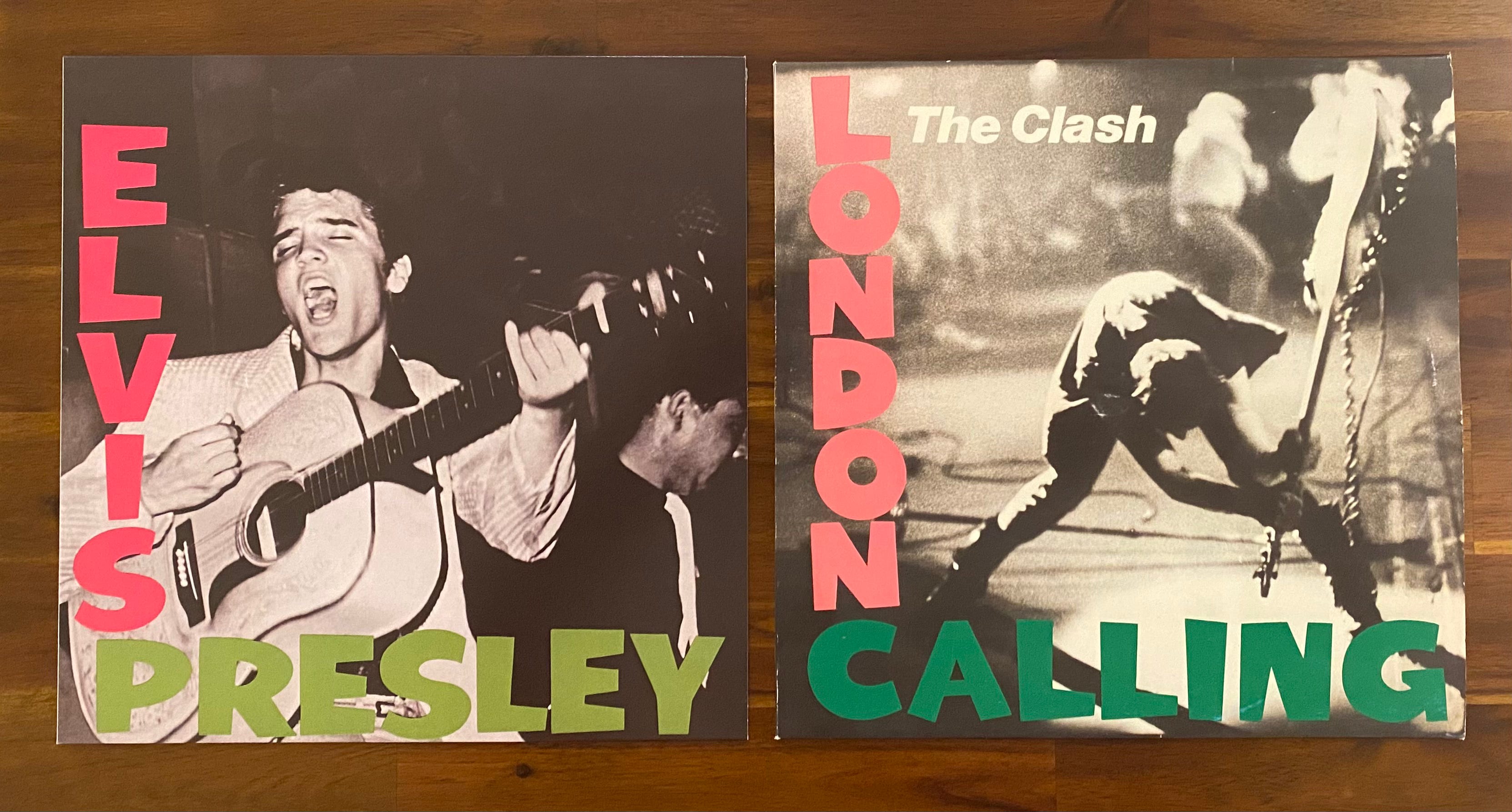
1956: The King of Rock and Roll Elvis Presley releases his debut studio album, simply titled “Elvis Presley.” The iconic cover of Elvis on stage with his guitar, belting out a song, with his first name in pink lettering and his last in green, would be mimicked by The Clash for their 1979 LP, “London Calling.”
Produced by Sam Phillips for the recordings done at Sun Studios in Memphis, and by Stephen Sholes for the RCA Victor recordings in Nashville and New York, the album includes Elvis's classic versions of “Blue Suede Shoes,” “Tutti Frutti,” and “Blue Moon.” The track “I'll Never Let You Go (Little Darlin')” was a No. 1 hit, while four other singles all made the Top-20.
The album itself received universal critical acclaim and was a smash hit in the U.S. and the U.K., spending ten weeks at No. 1 on the Billboard Top Pop Albums chart, the first Rock and Roll record ever to do so. It was also the first million-selling Rock and Roll LP, earning Platinum certification (Gold at the time). One of the most important works in the rock oeuvre, it was ranked No. 56 on Rolling Stone's 500 Greatest Albums of All Time, (c) 2012 (“London Calling” is 8th on that list), and is included in the reference book 1001 Albums You Must Hear Before You Die.
Pictured: Comparison of the Elvis Presley and London Calling album covers. The Clash didn’t quite match Elvis’s font colours. That’s Paul Simonon on the Clash cover pounding the stage with his bass guitar. Maybe he noticed a loose nail.
Photo credit: Your humble blogger’s copies of the LP’s placed on his dining room table.