This Day in Music
December 12

Wallowing on the banks of an underwater sea while taking in a long production by punk legends, remembering two more legends, a listicle (!), and The King is banned! Long live The King! All on this day in music.
People
1943: Forrest Richard Betts is born in West Palm Beach, Florida. Known professionally as Dickie Betts, he was co-lead guitar player with legendary American blues group, The Allman Brothers Band, from their 1969 founding until 2000. Though Betts and Gregg Allman had a tumultuous relationship over the years, it is rumoured that they reconciled before Allman’s death in 2017.
Betts is responsible for writing some of the ABB’s most famous songs, including “In Memory of Elizabeth Reed,” “High Falls,” “Jessica,” and the band’s only No. 1 hit, “Ramblin’ Man.” Outside the ABB, Betts performed for decades with his bands Great Southern and The Dickie Betts Band. Following a stroke in 2018, Betts retired from performing, and died on April 18, 2024. Today would have been his 82nd birthday.
1970: The Doors play what would be their last-ever concert with Jim Morrison at The Warehouse in New Orleans. He would tragically die only seven months later at his apartment in Paris.
Releases
2025: Greater Toronto Area progressive rockers Bank Swallow release their fourth studio work, the double-album, “Underwater.” Credited as “Banks Wallow,” the record features a prominent drum sound, horns, mellotron, moody keyboards, ethereal vocals, and ripping guitar parts and solos, providing a sonic experience that beautifully contrasts modern and classic prog. Performed by Alan Walks (g; v), Geoff Martell (key), Mike Flynn (g), and Jody Brumell (d), and composed mostly by Walks, the album is an instant classic. It can be heard and downloaded here.
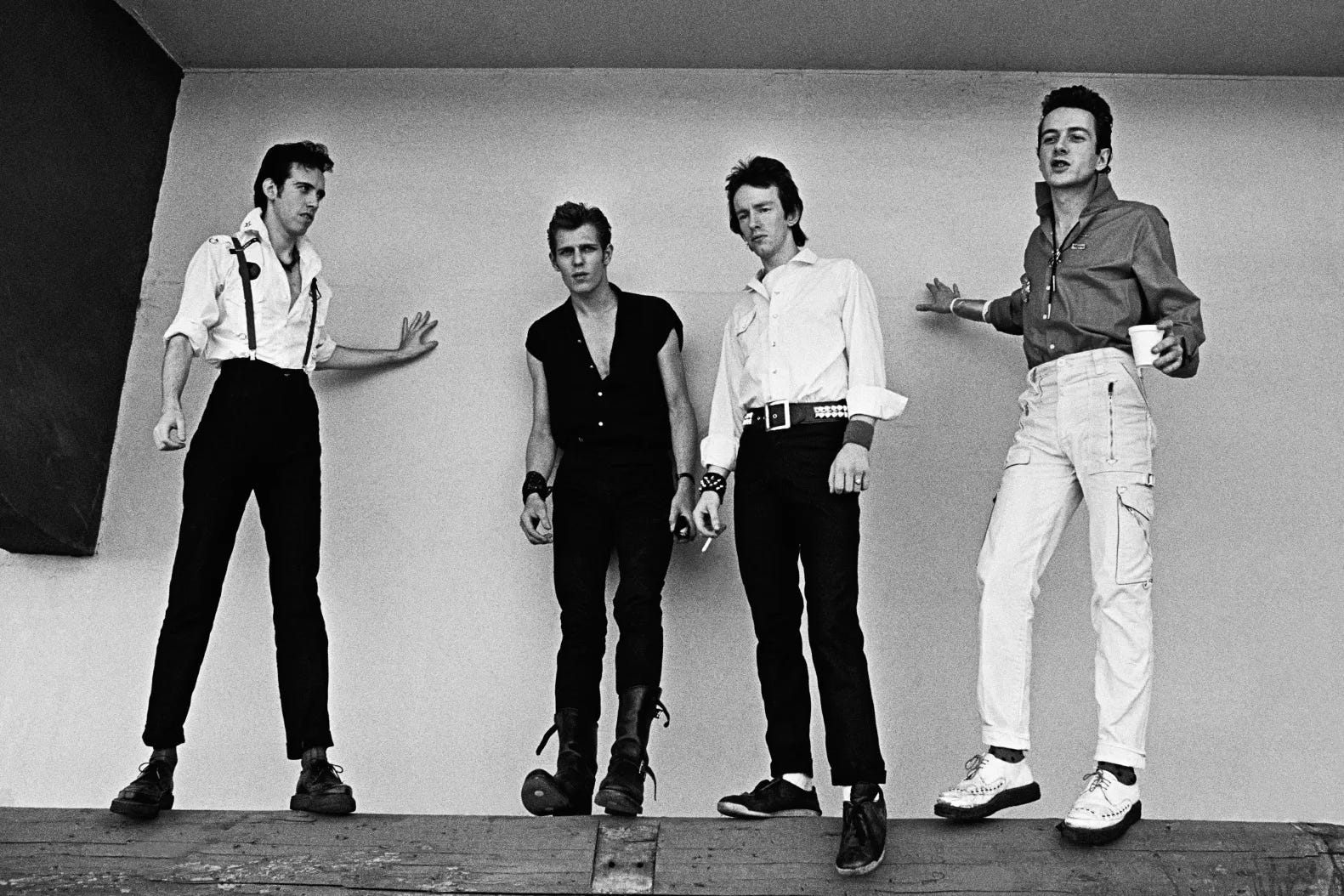
1980: English punk-rockers The Clash release their fourth studio album, “Sandinista!” A triple-album with 36 songs, it was a middle finger of sorts to CBS Records, which initially refused to release the band’s previous album, “London Calling,” as a double-LP, but then immediately released Springsteen’s “The River” as a double, raising the ire of the group.
The music expanded beyond pure punk, much like “London Calling” did, to include styles of funk, reggae, jazz, folk, dub, R&B, disco, and rap. It was met with mostly high praise by critics, though the length of the album was a common criticism. Mick Jones said of the length, “I always saw it as a record for people who were, like, on oil rigs. Or Arctic stations. People that weren’t able to get to the record shops regularly.”
The most famous songs from the collection are “The Magnificent Seven,” and the great cover of Eddy Grant’s song with The Equals, “Police on My Back.” However, it is a consistently excellent record across all tracks.
The album reached No. 19 on the UK Albums list, No. 24 on the Billboard 200, and No. 3 on the Canadian RPM 100. It was certified Gold in the US and Canada.
Listicle
For listicles, the proper rules of essays are abandoned, and I write them in the first person, because they are entirely my own personal taste.
Ranking the songs on the original UK release of The Beatles’ album, “Help!” This is one of the truly great albums of the Rock and Roll oeuvre. All of the songs on the album are fabulous, making the difference from one to 14 only a matter of degrees.
Ranking
You’ve Got to Hide Your Love Away
I’ve Just Seen a Face
Yesterday
Dizzy Miss Lizzy
Help!
The Night Before
I Need You
Ticket to Ride
Another Girl
You’re Going to Lose That Girl
You Like Me Too Much
Tell Me What You See
It’s Only Love
Act Naturally
What do you think? Add your ranking, or even just your short list of favourites in the comments. Let’s get a discussion going of this amazing LP!
The Daily Elvis
1957: In Portland, Oregon, DJ Al Priddy of 1190 KEX radio is fired for playing “White Christmas” by Elvis. It was the opinion of the station’s manager that Elvis’s version of the song “desecrated the spirit of Christmas” and did not represent composer Irving Berlin’s traditional vision. He banned the song from airplay. As it turned out, the whole thing was just a publicity stunt to generate interest for listeners and boost the station’s ratings.
1969: “From Memphis to Vegas/From Vegas to Memphis,” Elvis’s eleventh studio album, is certified Gold by the RIAA for 500,000 confirmed units shipped. Released on October 14, 1969, only half the album is a studio production made in Memphis, while the other half is a live performance recorded in Las Vegas. The record captured the “1968 Comeback Special” version of Elvis at his peak.
Pictured: The Clash in 1980, from L to R: Mick Jones (g; v; key), Topper Headon (d; v), Paul Simonon (bg; v), and Joe Strummer (g; v; key).